Winter car prep checklist for Carmichael drivers: battery and brakes

A car that feels ready on a mild morning may still need attention before a colder trip. For a winter car prep checklist in Carmichael, start with the battery, brakes, and routine maintenance. A careful review helps you identify what needs attention now and what can wait for scheduled service.
Winter preparation doesn’t mean guessing at every mechanical detail. This guide covers battery checks, brake symptoms, fluids, belts, hoses, exhaust, oil, and filters, along with visibility and basic roadside supplies. Use the checklist to plan your next steps, follow your vehicle manufacturer’s maintenance schedule, and note any changes you’ve noticed while driving around Carmichael, Fair Oaks, Sacramento, or nearby communities.
Key Takeaways
- Have an older battery and its connections assessed before cold weather makes starting harder.
- Pay attention to changes in brake response, noise, or pedal feel, and include tire condition and brake fluid in a safety check.
- Look for signs of aging belts or hoses, low or worn fluids, and exhaust concerns as part of seasonal preparation.
- Follow your vehicle’s oil requirements and consider changing the filter with the oil to support dependable engine lubrication.
Table of Contents
Belts, hoses, fluids, and exhaust inspection
Before winter, inspect visible belts for cracking, fraying, or a glossy surface, and hoses for brittleness, swelling, or soft spots. A loose or damaged belt can affect engine-driven systems; a weakened hose can leak coolant. Check coolant level and condition when the engine is cool, and use coolant that meets the vehicle manufacturer’s specifications. If the correct mixture is needed, a 50/50 coolant-and-water solution maintains antifreeze capability. Look underneath for leaks and have the cooling system checked if the level keeps dropping.
Check engine oil, brake fluid, power-steering fluid if equipped, and washer fluid against the marks on each reservoir or dipstick. Low or dirty fluid deserves attention, and the owner’s manual identifies the correct type. Inspect the exhaust for visible damage or loose parts; if you smell exhaust inside the cabin, stop driving and arrange an inspection. Winter rain, fog, and colder temperatures can reduce visibility or traction, while snow and ice may affect trips toward higher elevations. Carmichael drivers planning routine vehicle care can find local details on the Carmichael service page.
Check wiper blades by running them across a wet windshield. Replace blades that streak, chatter, or miss areas, and fill the reservoir with a winter-rated washer fluid. Test the spray pattern so fluid reaches the glass. NHTSA’s winter driving tips recommend checking tread and tire pressure before cold weather, and tires worn to 2/32 inch should be replaced. More tread may be needed for wet or snowy conditions. Use the pressure listed in the owner’s manual or driver-side door-frame label. Snow tires on all four wheels provide the best winter traction in areas with heavy winter weather. Near Carmichael, mountain-road chain requirements depend on active conditions and posted controls, so follow route signs; use snow tires or chains when conditions and posted requirements call for them.
- Keep an ice scraper, flashlight, gloves, jumper cables, blankets, water, and a phone charger in the vehicle for winter delays.
- On wet, icy, or snow-covered roads, slow down and leave extra following distance to allow more time to stop.
Brake inspection
Before winter driving, notice how the brake pedal feels and how the vehicle responds. A soft or squeaky pedal, or reduced braking response, deserves inspection. A technician can check pads, rotors, calipers, and pistons for wear or damage. Uneven wear or a change in braking feel can reveal a problem that isn’t obvious from the driver’s seat.
Brake fluid matters, too. Check its reservoir level and condition as part of seasonal maintenance, and note any warning light or visible leak. Don’t ignore pulling, vibration, grinding, or a pedal that sinks lower than usual. These symptoms deserve a prompt brake-system assessment rather than waiting for colder or wetter weather. A brake check can help identify wear and assess whether further attention is needed.
Antilock brakes (ABS) and conventional brakes respond differently when wheels begin to lock. With ABS, apply firm, continuous pressure to the pedal and let the system control the braking. Without ABS, pump the brakes if the wheels start to lock. Either way, slow down on slick roads and leave extra following distance, because reduced traction increases stopping distance.
Check for brake warning signs, test the headlights, brake lights, and turn signals, and look for cracked or frayed belts. Lighting helps other drivers see your vehicle in rain or fog. For more on warning signs, see signs your brakes need attention. Test the heater, front defroster, and rear window defogger before a trip: the heater warms the cabin, while clear windows help you see traffic and road conditions. If the defroster cannot clear the windshield or the brake pedal feels abnormal, arrange an inspection before driving in poor conditions.
Why Start the Year with a Vehicle Check?
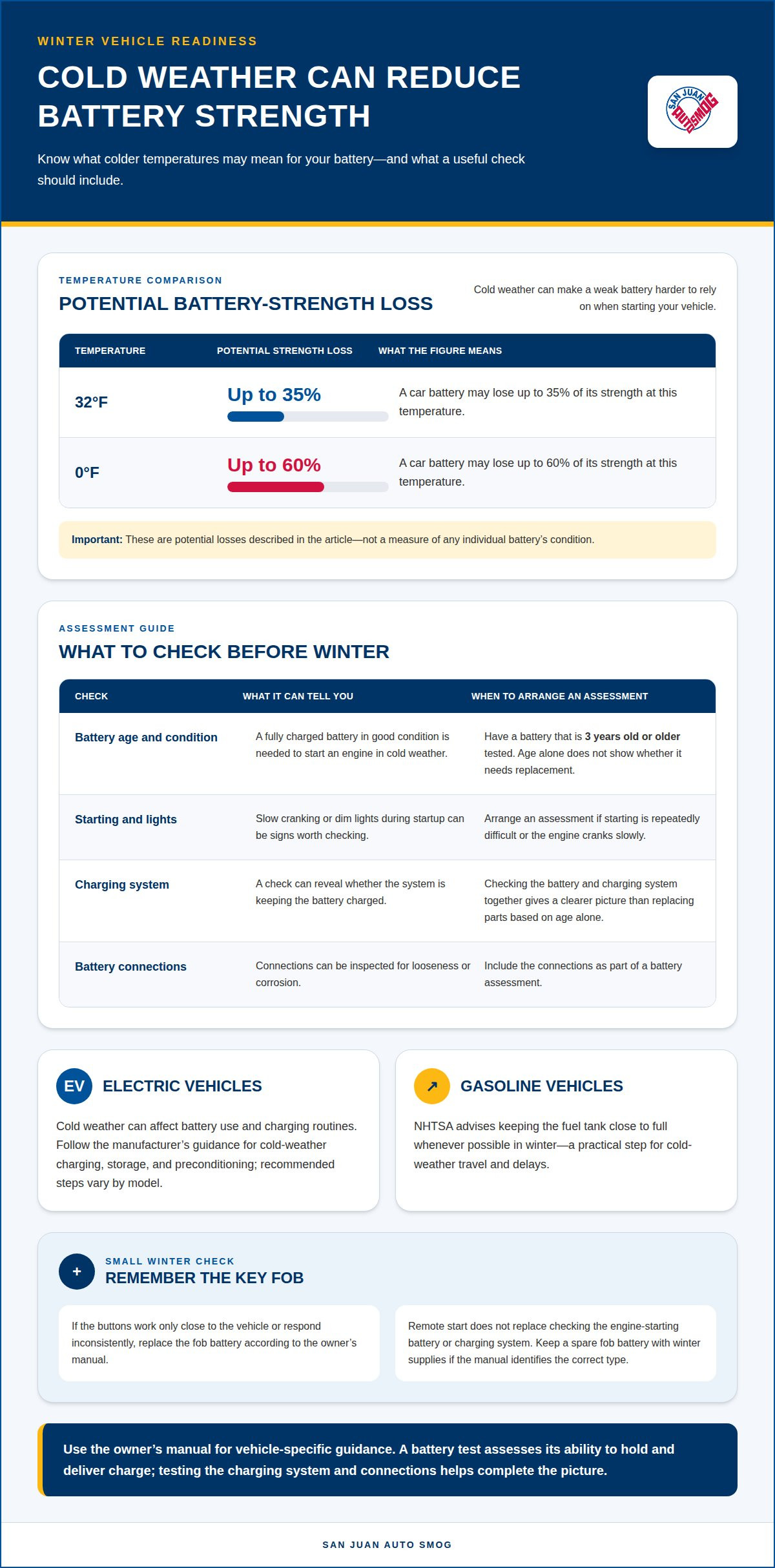
Cold weather can make a weak vehicle battery harder to rely on. A fully charged battery in good condition is needed to start an engine in cold weather. Have a battery that’s three years old or older tested before winter; its age alone doesn’t show whether replacement is needed.
A useful battery test checks more than whether the engine starts once. It assesses the battery’s ability to hold and deliver charge, while a charging-system check can reveal problems keeping it charged. A technician can also inspect connections for looseness or corrosion. Slow cranking, dim lights during startup, or repeated difficulty starting are reasons to arrange an assessment. Testing the battery and charging system together gives a clearer picture than replacing parts based on age alone.
In an electric vehicle, cold weather can affect battery use and charging routines. Follow the manufacturer’s guidance for cold-weather charging, storage, and preconditioning, since recommended steps vary by model. For a gasoline vehicle, NHTSA advises keeping the fuel tank close to full whenever possible in winter, a practical step for cold-weather travel and delays.
Add the key fob to your winter readiness check. If its buttons work only close to the vehicle or respond inconsistently, replace the fob battery according to the owner’s manual. Remote start can warm the vehicle before a trip, but it doesn’t replace checking the engine-starting battery or charging system. Keep a spare fob battery with your winter supplies if the manual identifies the correct type.
- Note the battery’s age and any slow starts before arranging a battery and charging-system test.
- Use the owner’s manual for vehicle-specific electric-vehicle and key fob guidance.
Pre-winter oil and filter change
Engine oil thickens in cold temperatures and may circulate less easily when the engine first starts. Before winter, check the owner’s manual for the recommended oil grade and service interval. The correct grade depends on the engine and manufacturer specifications, not just the season. Some vehicles allow different grades for different temperatures; others specify one grade year-round.
Oil that’s overdue for replacement may not protect engine parts as intended. A seasonal oil change helps you follow the maintenance schedule, particularly if service is due or the vehicle has been driven under demanding conditions. Replacing the oil filter at the same time is sensible because a clogged filter can restrict oil flow. Fresh oil and a serviceable filter help lubricate the engine through winter.
Use the dipstick to check the oil level: park on level ground, follow the manual’s instructions, and read the markings. If the level is low between services, add only the specified oil and watch for repeated drops that may indicate a leak or oil consumption. Dark oil alone doesn’t mean a change is due; consider mileage, time, driving conditions, and the manufacturer’s schedule. For Carmichael drivers, a winter car prep checklist should include the oil service interval, especially after frequent short trips.
Oil supports engine operation, but it doesn’t create tire traction or replace checks of brakes, tires, or coolant. Treat each system separately in seasonal maintenance. San Juan Auto Smog offers full-synthetic oil changes, with a multi-point inspection, fluid check, and tire rotation available as options. A full-synthetic oil change uses the appropriate oil and filter for your vehicle; schedule an oil change if service is due. Regular maintenance supports engine performance and reliability, but an oil change alone doesn’t determine California smog inspection results. Store jumper cables securely with other winter supplies, rather than treating them as a substitute for battery testing.
San Juan Auto Smog
San Juan Auto Smog, a STAR-certified Test & Repair station (license RC303707) at 4701 San Juan Ave, Fair Oaks, CA 95628, helps Carmichael-area drivers keep routine maintenance on track with services that support year-round vehicle care. If your oil service is due, a Full-Synthetic Oil Change can help maintain engine performance and reliability through changing seasons. A smog check is a separate emissions inspection; an oil change alone does not determine whether a vehicle passes.
For winter preparation, use the checklist to identify concerns such as unusual brake response, fluid loss, or a weak battery, then arrange the appropriate maintenance. San Juan Auto Smog also provides STAR-Certified Smog Checks, Older Vehicle Smog Checks for 1999 and older vehicles, and RV, Van, and Heavy Truck Smog Checks. These services address different needs, so choose the one that fits your vehicle and maintenance schedule. For repairs found during a winter check, the shop also offers auto repair and maintenance; California’s auto-repair consumer guide explains your right to a written estimate, and the Bureau of Automotive Repair’s Smog Check Program covers state smog requirements.
For help with your vehicle’s next maintenance step, contact San Juan Auto Smog. Text (916) 961-6009 to make an appointment.
Make your next maintenance step count
Use this winter car prep checklist for Carmichael drivers as a starting point, then keep a simple maintenance record. Note when routine services were completed and any changes you notice while driving. This record can make future service visits more focused, especially for older vehicles with a longer maintenance history.
Choose your next step based on what’s due and what has changed, rather than trying to address everything at once. If you’ve noticed a new sound, warning light, or change in how the vehicle starts or stops, describe it when arranging service. Clear details help technicians understand your concern and explain relevant findings.
San Juan Auto Smog offers maintenance and smog inspection services for different vehicle needs. If you’re ready to discuss your next step, contact San Juan Auto Smog today. Please book ahead. Text (916) 961-6009 to make an appointment. A steady maintenance routine can help you feel more prepared for the season ahead.
Frequently Asked Questions
How do I know if my car battery will make it through winter?
A visual check can’t reliably predict battery performance, so consider the battery’s age and starting behavior, then arrange a battery test if you have concerns. Slow cranking, repeated jump-starts, or a battery warning light also warrant attention. Testing shows whether the battery holds enough charge, while a charging-system check can identify related problems.
What should be on a winter car preparation checklist?
Check the battery and charging system, brakes, tires, coolant, other fluid levels, belts, hoses, exhaust, oil, and filter. Also check lights, wiper blades, and the defroster, and prepare an emergency kit with items such as a flashlight, gloves, blankets, water, and jumper cables. Before a mountain drive from Carmichael, Fair Oaks, or nearby communities, review road and weather conditions and follow posted chain controls.
How do I check a car battery before winter?
Start with a visual inspection for loose connections, corrosion, or a damaged battery case. Don’t touch leaking or damaged parts. Note whether the engine cranks slowly, especially after the vehicle has been sitting. A battery test measures its ability to deliver and hold charge; a charging-system test checks whether it is being recharged. Battery age and test results together help guide the next step.
What coolant and antifreeze should I use, and how do I check the level?
Use coolant that meets the vehicle manufacturer’s specifications; the owner’s manual identifies the correct type. With the engine cool, check the reservoir against its level marks. If coolant is low, a 50/50 coolant-and-water solution maintains antifreeze capability, provided it matches the manufacturer’s requirements. Don’t rely on color alone to choose coolant, since color does not establish compatibility. A repeated drop in level calls for investigating a leak.
More articles
- How Long Does a Smog Check Take at the Inspection Station?
- Older Car Oil Change Frequency in Citrus Heights: When to Change Your Oil
- Which Warranty Covers an Oil Change? Quiz Answer Explained
- Do Hybrid Cars Need Smog Checks in California? The Rules
- Smog Repair in Sacramento: What Happens After a Failed Test
- Best Smog Shop for Quick Turnaround in Orangevale