How Long Does a Smog Check Take at the Inspection Station?

If you’re asking how long a smog check takes, the inspection itself usually takes about 30 minutes once testing begins. The total visit can be longer, so plan for more than the test alone. Knowing the difference helps you make realistic plans for the rest of your day.
How long does a smog check take? Your visit includes both any wait before testing starts and the test itself. The required procedure depends on your vehicle, so considering both parts gives you a more realistic expectation than relying on a single time estimate.
This guide explains what affects the full visit, how California emissions testing varies by vehicle, and how to prepare for a smoother process. It also covers retests and how routine maintenance fits alongside a smog check, so you can arrive prepared and make informed decisions about your vehicle.
Key Takeaways
- Allow for both the inspection and any queue; vehicle type and station demand can affect your total visit.
- The emissions test can vary by vehicle, so age and type help determine what the inspection involves.
- If the battery was recently disconnected or replaced, readiness monitors may need time to reset before testing.
- For a private vehicle sale, sellers generally must provide a valid Smog Check certificate from within the last 90 days, though exemptions apply.
Table of Contents
Typical inspection duration
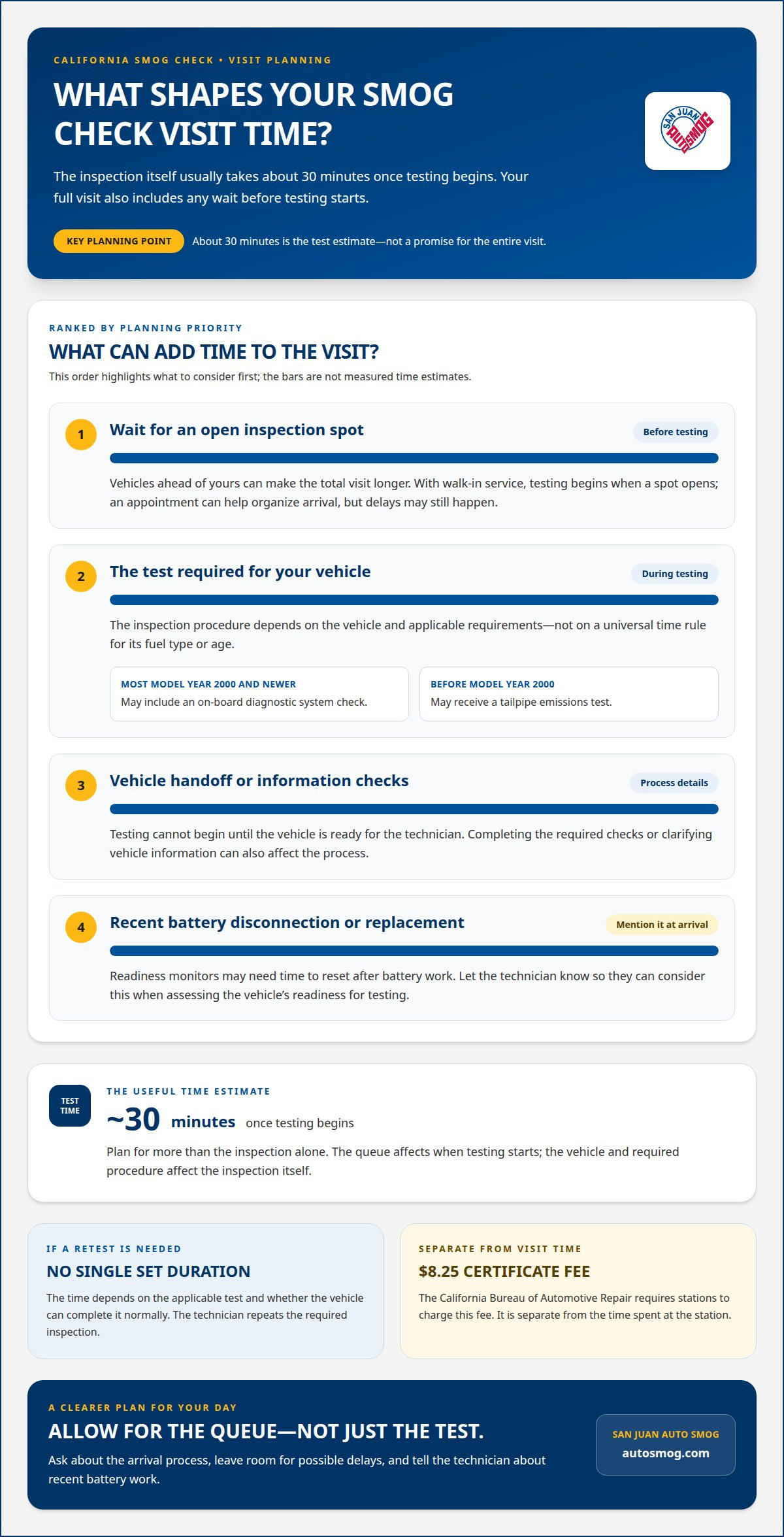
A California smog inspection usually takes about 30 minutes once testing begins. That estimate covers the inspection itself, not time spent waiting for an available inspection spot. The total visit can therefore be longer when vehicles are ahead of yours or the station is busy. The test required for your vehicle also affects what the technician checks.
There isn’t a separate standard duration for every vehicle type. The inspection procedure depends on the vehicle’s model year and applicable test requirements. For most vehicles from model year 2000 onward, a Smog Check may include an on-board diagnostic system check. A vehicle from before model year 2000 may receive a tailpipe emissions test instead.
Diesel, hybrid, and older vehicles don’t automatically take longer because of their fuel type or age. The required test and the vehicle’s systems determine the inspection steps. A hybrid, for example, may need an emissions-system check, while an older vehicle may follow a different procedure. The test type, not a universal time rule for these categories, is the useful distinction.
California Smog Check results are valid for 90 days, according to the California Bureau of Automotive Repair. This matters when you need a certificate for a vehicle transaction or another time-sensitive purpose. A completed inspection and a valid certificate are related, but the certificate’s validity period is separate from the time spent at the station.
A retest after a failed inspection has no single set duration. Its length depends on the required test and whether the vehicle can complete it normally. The technician must repeat the applicable inspection, so the original result alone doesn’t determine how long a retest takes.
According to the California Bureau of Automotive Repair, stations must charge an $8.25 Smog Check certificate fee. That fee is separate from the inspection duration. For a clearer estimate of the time involved, distinguish the roughly 30-minute test from your full visit, including any queue and the steps required for your vehicle’s smog inspection.
Waiting for an available inspection spot
Your total visit includes the wait before testing begins and the inspection itself. Separating queue time from test time helps you plan the rest of your day.
Wait Time for an Inspection Spot
The wait is the time between your arrival and the start of testing. It matters because an estimate for the inspection itself doesn’t account for vehicles already ahead of you. A station handling several arrivals may have a longer queue than one with an open testing bay.
An appointment can help organize your arrival, but it can’t prevent every delay. If earlier inspections take longer than expected, the schedule may shift. When arranging your visit, ask about the arrival process and leave room in your plans for waiting.
Without an appointment, your start time depends on when a testing spot opens. If other customers are waiting, that wait is separate from the inspection, not additional testing time. Booking ahead is the simplest way to keep your visit predictable.
Factors That Extend Inspection Time
The overall timeline can change with the station’s workload, the vehicle handoff, or the required test. Two visits to the same station may not take the same amount of time. A busy period can add waiting before testing, while a vehicle-specific issue can affect the inspection after it starts.
For example, a technician may need more time to complete the required checks or clarify vehicle information, delaying the next customer. Testing also can’t begin until the vehicle is ready for the technician. These are process delays, not a fixed extension that applies to every vehicle.
Keep the distinction clear: the queue affects when testing starts, while the vehicle and test process affect the inspection itself. If your schedule is tight, leave room for delays rather than planning around the test time alone. That gives you a more realistic estimate of the full visit.
Emissions testing
A California Smog Check evaluates whether a vehicle meets applicable emissions requirements. The required test depends on factors such as fuel type and model year, so the process isn’t identical for every car. Knowing which rules generally apply can help explain why inspection steps vary.
According to the California Bureau of Automotive Repair, gasoline, hybrid, and alternative-fuel vehicles from model year 1976 and newer generally need a Smog Check. Diesel vehicles from model year 1998 and newer generally need one as well, according to the California Bureau of Automotive Repair. These general requirements help explain why a vehicle’s age and fuel type matter when determining whether testing applies.
Some newer vehicles are exempt in specific registration or ownership situations; the DMV’s smog inspection page summarizes when an inspection is required. The California Bureau of Automotive Repair says gasoline, hybrid, and alternative-fuel vehicles that are eight model years and newer don’t need a Smog Check for registration renewal. For a change of ownership, those vehicle types that are four model years and newer don’t need one. Which rule applies depends on why the inspection is needed.
Timing can also depend on the emissions test used for the vehicle. A Smog Check may include an on-board diagnostic system check for most 2000 and newer model year vehicles. Pre-2000 model year vehicles may receive a tailpipe emissions test. The technician follows the procedure that applies to the vehicle, rather than using one identical test for all model years.
For most private-party sales, California generally requires the seller to provide a Smog Check certificate issued within the last 90 days, though exemptions apply. A California Smog Check certificate is valid for 90 days, according to the California Bureau of Automotive Repair. These time limits matter when planning a sale, because certificate validity is separate from how long the inspection itself takes.
Preparing for a smog check
A little preparation can help the inspection go smoothly. Before arriving, know your vehicle’s model year and fuel type, and mention any recent battery work. These details help the technician understand which test applies and whether the emissions monitors may need attention.
A replaced or disconnected battery needs special consideration. Battery work can reset the readiness monitors, which need to complete their self-checks before the vehicle is ready for testing. The time and driving conditions needed vary by vehicle. Check your owner’s manual or ask a technician for guidance before your Smog Check. If your check engine light is on, see BAR’s Smog Check Program guidance and have the cause repaired first. If you test before the monitors are ready, the vehicle may not be prepared for the required inspection.
Tell the technician if the battery was recently disconnected or replaced, even if the vehicle seems to run normally. This information provides useful context before testing and helps distinguish a monitor that hasn’t completed its checks from an emissions test result.
Plan your visit around the correct vehicle details. A gasoline vehicle, hybrid, diesel, and older model may have different inspection requirements. For example, a pre-2000 vehicle may receive a tailpipe emissions test, while most 2000 and newer vehicles may receive an on-board diagnostic system check. Sharing the model year and fuel type helps clarify the applicable procedure.
For a private sale, a Smog Check may be required, but exemptions apply. When required, California generally requires the seller to provide a certificate showing the vehicle passed a Smog Check within the last 90 days. Planning ahead can help avoid arranging the inspection too early for the sale.
Mention any maintenance concerns that affect your vehicle’s overall condition. A routine maintenance check can identify items that need attention, but an oil change alone doesn’t ensure a passing emissions result. A smog test evaluates the emissions requirements that apply to your vehicle.
Ready to plan your inspection? Schedule a smog check and share any recent battery work when arranging your visit. Text (916) 961-6009 to make an appointment.
San Juan Auto Smog
San Juan Auto Smog, a STAR-certified Test & Repair station (license RC303707) at 4701 San Juan Ave, Fair Oaks, CA 95628, helps California drivers plan an inspection around their vehicle’s test requirements and distinguish testing time from waiting. Its STAR-Certified Smog Check serves drivers seeking an emissions inspection, while older vehicles, RVs, vans, and heavy trucks have specialized inspection options. As a Test & Repair station, the shop can also diagnose and repair a vehicle that fails, then retest it.
If routine maintenance is also due, you can plan a Full-Synthetic Oil Change alongside your smog visit. San Juan Auto Smog offers full-synthetic oil changes, with a multi-point inspection, fluid check, and tire rotation available as options. An oil change supports engine maintenance, but it doesn’t guarantee a passing smog result. Keeping maintenance current is a practical way to care for your vehicle beyond inspection day.
For a smog check or help choosing the service that fits your vehicle, contact San Juan Auto Smog. Text (916) 961-6009 to make an appointment.
Make Your Next Visit Part of a Maintenance Plan
Knowing how long a smog check takes helps you plan your visit and consider what maintenance is due next. Keep track of upcoming service and raise any concerns with the technician. A clear picture of your vehicle’s needs helps you plan routine care without treating an emissions test as a diagnosis of every system.
San Juan Auto Smog offers a STAR-Certified Smog Check and Older Vehicle Smog Check (1999 and older). If an oil change is also due, its Full-Synthetic Oil Change can be planned alongside the inspection. An oil change supports routine engine maintenance, but it does not ensure a passing emissions result.
Choose the service that fits your vehicle and what it needs now. If you have questions about planning an inspection or combining it with maintenance, contact San Juan Auto Smog. Please book ahead. Text (916) 961-6009 to make an appointment. A practical next step can help you stay organized and care for your vehicle with confidence.
Frequently Asked Questions
How Long Is a Smog Test, Start to Finish?
Plan for the inspection plus the time it takes to reach an open testing spot. The test itself usually takes about 30 minutes, but the full visit depends on the station’s queue and the procedure required for your vehicle. For example, arriving during a busy period may mean waiting before testing begins. Treat the test estimate and your total visit as separate parts of your schedule.
How long does a smog check usually take?
The inspection usually takes about 30 minutes after testing starts. Your vehicle’s test procedure can affect the pace, so the visit won’t always follow the same sequence as another car’s. If you’re arranging other plans around the inspection, leave room for the technician to complete the applicable checks and explain the result before you leave.
How long does a smog check take in California?
In California, the inspection itself usually takes about 30 minutes. That’s a useful planning estimate for the test, not a set arrival-to-departure time. The total visit depends on when a testing spot becomes available and which procedure applies to your vehicle. Drivers in Fair Oaks and nearby communities can use the estimate to plan, while keeping their schedule flexible.
How much extra time should I allow for waiting at a smog station?
There’s no single extra-time allowance that fits every visit. The wait depends on how many vehicles are ahead and how quickly testing spots open. A short line may mean little delay, while several waiting vehicles can push back your start time. If you’re coming from Carmichael, Sacramento, Citrus Heights, Orangevale, or Gold River to San Juan Auto Smog in Fair Oaks, leave flexibility for the queue and travel.
What should I bring to a smog check appointment?
Bring your vehicle and any DMV notice explaining why an inspection is due. For a retest, the previous inspection result can give the technician useful context. Be ready to explain the reason for your visit, such as registration renewal or a vehicle transaction. These details help clarify what the inspection needs to address.
More articles
- Older Car Oil Change Frequency in Citrus Heights: When to Change Your Oil
- Which Warranty Covers an Oil Change? Quiz Answer Explained
- Do Hybrid Cars Need Smog Checks in California? The Rules
- Smog Repair in Sacramento: What Happens After a Failed Test
- Winter car prep checklist for Carmichael drivers: battery and brakes
- Best Smog Shop for Quick Turnaround in Orangevale