Older Car Oil Change Frequency in Citrus Heights: When to Change Your Oil

For an older car in Citrus Heights, oil change frequency depends on the vehicle’s maintenance schedule, engine condition, and driving habits. Start with the owner’s manual. If the car has an incomplete service history or its needs have changed, a technician can help interpret the schedule.
It’s reasonable to want a clear plan without guessing about maintenance. This guide explains how technicians assess oil use and choose an oil type that matches the vehicle’s requirements. You’ll also learn why driving conditions matter, what warning signs deserve attention, and how an oil change can fit into a broader routine for caring for an older car.
Key Takeaways
- Driving patterns and engine condition both shape an oil-change schedule, so use the vehicle’s maintenance guidance as a starting point.
- Watch for changes in oil level or warning signs; tracking oil use can help identify when an older engine needs closer attention.
- Choose oil by the vehicle’s required viscosity and performance standards, rather than assuming high-mileage oil is always necessary.
- An oil change visit can be a convenient time to add optional services, such as a multi-point inspection, fluid check, or tire rotation.
Table of Contents
What happens if you miss the oil change interval?
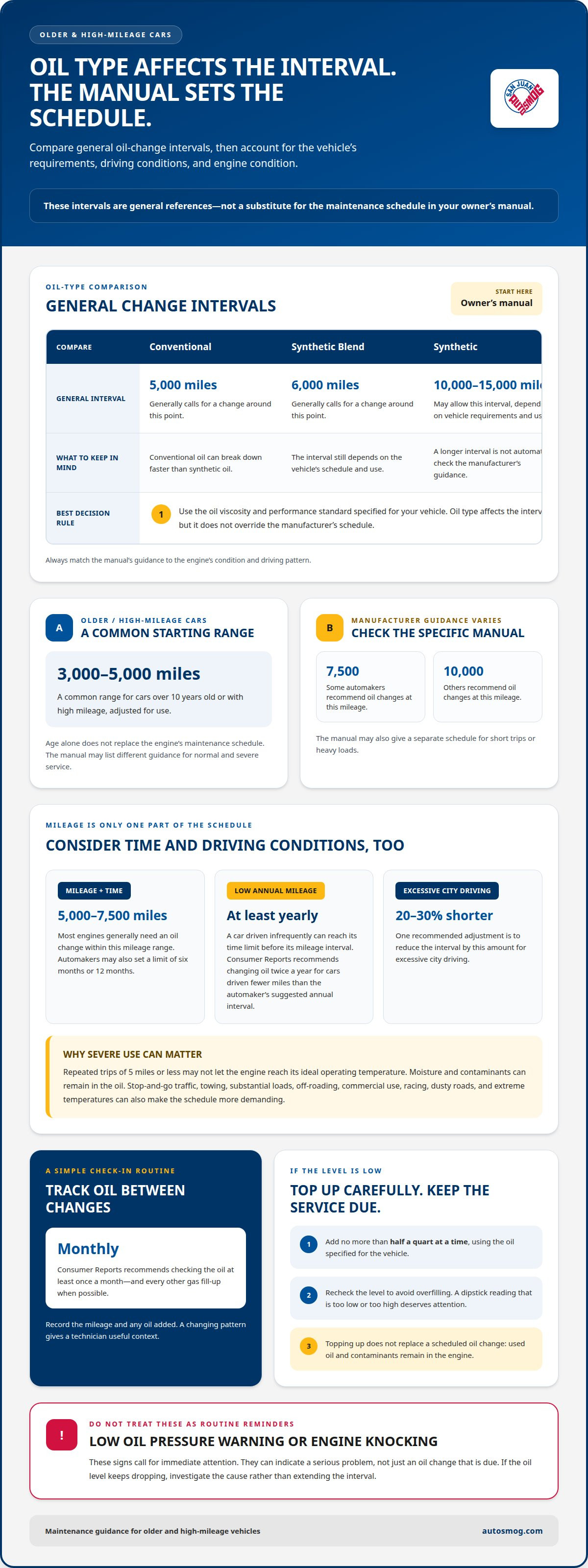
Missing an oil change does not make an engine fail immediately, but it means the oil is being used beyond its planned service interval. Heat and contaminants can reduce its ability to protect moving parts over time. This matters especially if an older engine already uses oil between changes. The owner’s manual sets the baseline and may list separate schedules for normal and severe driving conditions.
Driving habits can make that schedule more demanding. Repeated short trips may not give the engine enough time to reach its ideal operating temperature. Moisture and other contaminants can then remain in the oil and contribute to sludge buildup. Stop-and-go traffic adds repeated periods of idling and acceleration. Regular towing, carrying substantial loads, off-roading, commercial use, racing, or dusty roads can also call for more frequent changes. Extreme heat or frigid temperatures add further strain.
If you drive mostly in city traffic and rarely take highways, a shorter interval may be appropriate. Use the vehicle manufacturer’s schedule as the starting point, then consider the driving pattern and the engine’s condition. A car used for short daily trips has a different routine from one driven mainly on longer, steady trips. Conventional oil can also break down faster than synthetic oil, so the required oil type matters.
Repeatedly missing oil changes can contribute to sludge and deposits that restrict oil flow and increase wear. An overdue change does not automatically mean damage has occurred, but it is a reason to arrange maintenance instead of delaying further. Check the oil level monthly, particularly if an older, high-mileage car makes short trips or is driven daily. A low oil-pressure warning light or engine knocking calls for immediate attention (see what to do if the oil light comes on). These signs can indicate a serious problem, not just a reminder that an oil change is due.
Oil change intervals for older and high-mileage cars
For older cars in Citrus Heights, the manufacturer’s schedule is the starting point, with driving conditions and vehicle condition helping shape the interval. The manual may provide separate schedules for normal and severe service.
Owner’s Manual and Manufacturer Recommendations
The owner’s manual gives the manufacturer’s recommended interval for a specific vehicle and its driving conditions. It matters because age alone doesn’t replace the engine’s maintenance schedule. The manual may also give separate guidance for severe service, such as frequent short trips or heavy loads. A technician uses those instructions as a starting point and considers the car’s condition and oil use.
Mileage and Time Between Oil Changes
Mileage and elapsed time both help determine when oil needs service. Many manufacturers set both a mileage limit and a time limit. A car driven infrequently can reach its time limit before its mileage interval, so follow whichever comes first. The U.S. Department of Energy’s vehicle maintenance tips also recommend using the motor oil grade the manufacturer specifies.
Intervals by Oil Type
Oil type affects service intervals, but it doesn’t override the manufacturer’s schedule. Synthetic oils may allow longer intervals in some vehicles, but only when the manufacturer’s schedule allows it. Match the manual’s guidance to the engine’s condition and driving pattern. A technician can review these needs during an oil change service.
Oil consumption and regular oil-level checks
An older engine may use oil between scheduled changes, so checking the level matters as much as tracking the service date. Checking the oil regularly, such as once a month, is a simple habit. Regular checks can reveal a falling level before the next scheduled change. A technician can compare the reading with the vehicle’s service history and note whether oil use is increasing.
During an inspection, a technician checks the dipstick against its marked range and looks for a level that is too low or too high. They also consider the engine’s condition, mileage, and specified oil type. A single reading cannot explain why oil is disappearing. If the level keeps dropping, the technician can document the rate of use and advise whether closer monitoring or further attention is appropriate.
Oil consumption varies by engine, and acceptable consumption is specific to the vehicle and its manufacturer’s guidance. The specific model’s guidance and its observed pattern matter. Keeping a record of mileage and oil added gives a technician useful context when assessing a change in consumption.
If oil needs topping off, add a small amount at a time. Use the oil type specified for the vehicle, then recheck the level to avoid overfilling. Topping up does not replace a scheduled change because it leaves used oil and contaminants in the engine. If the level repeatedly runs low, investigate the cause rather than extending the interval. During an oil service, a technician can review the level, oil-use history, and next maintenance interval together.
Conventional, synthetic, and high-mileage oil
The right oil for an older vehicle depends on the manufacturer’s specifications, engine condition, mileage, and driving habits. Age alone does not mean the car needs a special formula. The owner’s manual lists the required viscosity grade and performance standard. These specifications matter more than choosing oil based only on a high odometer reading. A suitable recommendation starts with the vehicle’s requirements, then takes its condition and oil use into account.
Conventional oil may not resist heat and oxidation as well as some synthetic oils, but how quickly oil degrades depends on the oil formulation and driving conditions. Some high-mileage oils are synthetic or synthetic blends, so the label alone does not determine durability. Synthetic oil may offer benefits in certain temperatures or operating conditions, but products differ, and it usually costs more. Neither oil type automatically means you should extend the change interval. Follow the vehicle’s schedule and account for how it is driven, especially if an older car often makes short trips or is used in stop-and-go traffic.
Drivers may consider high-mileage oil for a vehicle with many miles. Some formulas include additives intended to condition seals or help manage wear, but their benefits vary by product and engine. They do not guarantee reduced wear or prevent or stop leaks. That doesn’t mean every vehicle at that mileage needs it: an older car that runs well may not need special motor oil. A technician weighs visible leaks, oil use, engine condition, and manufacturer guidance before recommending a type.
During an oil service, the technician matches the Society of Automotive Engineers viscosity grade to the vehicle’s requirements. The oil should also meet the applicable API, ILSAC, or ACEA performance standard. A high-mileage formula with the wrong viscosity is not the right choice just because the vehicle is older. Matching the specifications keeps the recommendation specific to the engine instead of relying on a general age or mileage rule.
If you are unsure which oil suits your older vehicle, book an oil-service appointment to discuss its maintenance needs.
San Juan Auto Smog: Full-Synthetic Oil Change
San Juan Auto Smog, a STAR-certified Test & Repair station (license RC303707) at 4701 San Juan Ave, Fair Oaks, CA 95628, provides Full-Synthetic Oil Changes for drivers seeking maintenance for an older or high-mileage vehicle. San Juan Auto Smog offers full-synthetic oil changes, with a multi-point inspection, fluid check, and tire rotation available as options. The appropriate oil still depends on the manufacturer’s specifications, engine condition, and driving habits. Full synthetic is not automatically right for every older car, so the service should follow the required oil grade and applicable performance standards.
Bring the vehicle’s maintenance records if you have them. They can help the technician understand its recent service history and discuss an appropriate interval. Regular oil service also helps keep maintenance organized as your car ages. An oil change alone does not ensure a vehicle will pass a smog inspection, but consistent maintenance supports engine performance and reliability.
For help with your vehicle’s oil maintenance, contact San Juan Auto Smog. Text (916) 961-6009 to make an appointment.
Keep your older car’s maintenance on track
A consistent maintenance routine makes an older car easier to care for. Keep service records together, note changes in oil use, and share those details at your next appointment. The right oil change frequency for an older car in Citrus Heights depends on the vehicle and how you drive it, so use both to guide your maintenance plan.
San Juan Auto Smog offers Full-Synthetic Oil Changes, STAR-Certified Smog Checks, Older Vehicle Smog Checks for vehicles 1999 and older, and auto repair. California’s auto-repair consumer guide explains your right to a written estimate. If your smog inspection is also due, planning it alongside routine maintenance can help coordinate both services. An oil change supports engine maintenance, but it doesn’t by itself ensure a vehicle will pass a smog inspection.
For guidance on your older car’s oil-change frequency in Citrus Heights, contact San Juan Auto Smog. Please book ahead. Text (916) 961-6009 to make an appointment. A clear maintenance plan can help you feel prepared for the miles ahead.
Frequently Asked Questions
How Often Should You Change Your Oil?
Follow the vehicle’s maintenance schedule and use whichever limit comes first, mileage or elapsed time. Record the date and odometer reading on each service receipt, then compare them with the manual’s next-service guidance. This is especially useful when several people drive the car or its service history is incomplete.
What oil change interval does the owner's manual recommend for an older car?
The maintenance schedule in the owner’s manual gives the interval for the specific vehicle and engine. Check the scheduled maintenance section instead of relying on a general guide for the model year. If you cannot find the schedule or have the wrong manual, a technician can identify the vehicle from its make, model, year, and engine information.
How do conventional, synthetic blend, and full synthetic oil change intervals compare for older cars?
The oil label alone does not determine the correct interval; follow the vehicle’s maintenance schedule. Check that the oil filter is replaced at the intervals specified in that schedule; some manufacturers call for replacement at every oil change. Oil and filter work together, so changing the oil while leaving a used filter in place can undermine the service.
Does stop-and-go driving or hot weather in Citrus Heights require more frequent oil changes?
Local weather alone does not determine the oil change schedule. What matters is whether the car’s actual use meets the severe-service conditions in its maintenance schedule. A Citrus Heights driver who mixes highway and local trips may have a different pattern from someone who uses the same vehicle mainly in demanding conditions. Base the interval on the schedule and the car’s real use.
What oil type and viscosity are recommended for high-mileage or older engines?
Choose oil that meets the vehicle’s specifications instead of relying only on a “high mileage” label. Containers list viscosity and performance standards, but the right product depends on the engine’s requirements. If you have added oil between services, tell the technician the product name or show them a photo of the label to help keep future maintenance consistent.
What are signs an older car needs an oil change sooner than scheduled?
A service reminder that appears earlier than expected or fresh oil spots beneath a parked car are reasons to arrange an assessment. A leak can lower the oil level, so do not treat it as a routine oil-change reminder alone. Note when the spot appeared and where it is beneath the vehicle; that information can help a technician investigate.
More articles
- How Long Does a Smog Check Take at the Inspection Station?
- Which Warranty Covers an Oil Change? Quiz Answer Explained
- Do Hybrid Cars Need Smog Checks in California? The Rules
- Smog Repair in Sacramento: What Happens After a Failed Test
- Winter car prep checklist for Carmichael drivers: battery and brakes
- Best Smog Shop for Quick Turnaround in Orangevale