Save Money on Car Maintenance in Citrus Heights with DIY Care

The cheapest maintenance isn’t always the task you do yourself. To save money on car maintenance in Citrus Heights, handle simple checks you can do confidently and keep up with routine care that helps limit avoidable wear. Tire rotations and brake inspections matter, too: even when they aren’t DIY jobs, they can help identify maintenance needs before they grow.
It makes sense to avoid unnecessary work and expenses. Basic tasks such as checking tire pressure or replacing wipers and filters may be manageable at home. Knowing when a symptom calls for professional attention can also help you avoid guesswork.
This guide covers preventive checks, ways to review a maintenance recommendation, and why following your vehicle’s schedule matters. The goal is a practical plan for caring for your car, whether you drive around Citrus Heights, Fair Oaks, Carmichael, Sacramento, Orangevale, Gold River, or nearby communities.
Key Takeaways
- Use your vehicle’s maintenance schedule to decide when routine care is due, rather than relying on a one-size-fits-all interval.
- Learn which simple checks you can handle at home and when a maintenance task calls for professional attention.
- Ask for a clear explanation of recommended work and how it relates to your vehicle’s condition and maintenance history.
- Understand how regular brake checks and tire rotations can help you keep track of wear and plan maintenance thoughtfully.
Table of Contents
DIY air-filter, tire-pressure and wiper maintenance
Car maintenance costs in Citrus Heights depend on your vehicle, the parts needed, and the work involved. Replacing a simple filter or wiper yourself may save labor costs, but diagnosis and repairs depend on the specific problem. To save money on car maintenance in Citrus Heights, start with tasks your owner’s manual explains clearly.
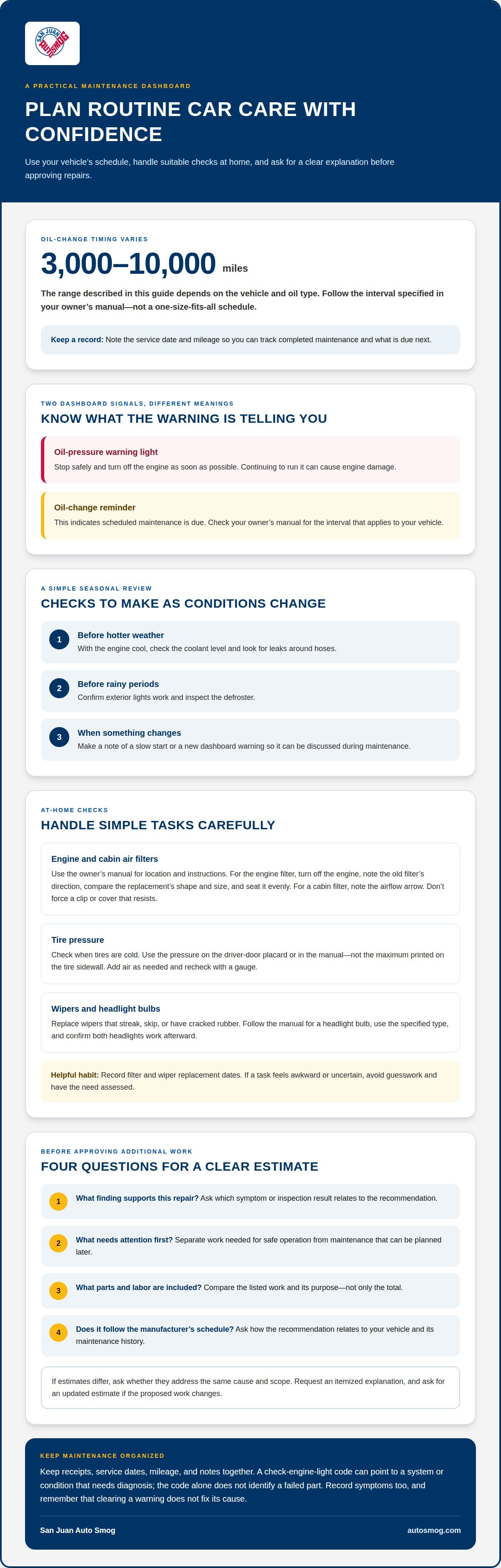
Before replacing an engine air filter, check the owner’s manual for its location and removal instructions. Turn off the engine, open the housing, and note the old filter’s direction. Compare the new filter’s shape and size, then seat it evenly before securing the housing. A poor fit can let unfiltered air pass through. If a clip or cover resists, don’t force it.
A cabin air filter may sit behind the glove compartment or beneath the dashboard. Follow the manual and note the airflow arrow before removing the old filter. If you buy a replacement filter, check that the part number matches your vehicle before opening the package.
Check tire pressure when the tires are cold. Use the pressure listed on the driver-door placard or in the manual, not the maximum printed on the tire sidewall. Add air as needed, then recheck with a gauge. Replace wiper blades that streak, skip, or have cracked rubber. Hold each arm securely during replacement to prevent it from striking the windshield.
- For a headlight bulb, follow the manual and match its specified type. Confirm the bulb is secure and both headlights work afterward.
- Record the date of each filter or wiper replacement to track future maintenance.
A practical way to save money on car maintenance in Citrus Heights is to handle suitable tasks yourself and leave uncertain repairs for assessment. If filter or wiper work feels awkward, a multi-point inspection can help identify visible maintenance needs and clarify what deserves attention.
Costs depend on the vehicle, parts, and work required. Replacing a filter or wiper yourself may save labor costs, while diagnosis and repairs depend on the problem.
Preventive maintenance and seasonal checks
Use the maintenance schedule in your owner’s manual as the starting point. Oil-change timing can range from 3,000 to 10,000 miles, depending on the vehicle and oil type. Follow the interval specified for your car, and record each service date and mileage. If the oil-pressure warning light comes on, stop safely and turn off the engine as soon as possible; continuing to run it can cause engine damage. An oil-change reminder, by contrast, indicates that scheduled maintenance is due.
Seasonal changes are a useful reminder to review items that affect daily driving. Before hotter weather, check the coolant level when the engine is cool and look for leaks around hoses. Before rainy periods, confirm that exterior lights work and inspect the defroster. Note changes such as a slow start or a new dashboard warning so they don’t get lost between routine visits.
Before paying for a recommended repair, review your warranty and any prepaid maintenance plan or service contract. Check covered services, mileage limits, expiration terms, and required records. If a repair may be covered, compare its description with the contract wording first. Keep receipts and maintenance notes together to track completed work and identify what remains due.
A check-engine-light code read can show a stored diagnostic trouble code, but the code alone doesn’t identify a failed part. An emissions-related code, for example, may point to a system or condition that needs diagnosis, not automatically to a component that needs replacement. Record the code and any symptoms, such as rough running, before deciding on repairs. Clearing a warning doesn’t fix its cause, and a car with the check-engine light on will not pass a California smog check; a smog failure diagnosis looks for the actual cause.
For seasonal maintenance, a brake check can help assess wear and braking concerns before they worsen. Pair the review with your maintenance records, then prioritize safety-related findings and items due under the manufacturer’s schedule.
Avoiding unnecessary upsells
Compare estimates by matching the recommended repair, parts, and labor, not just the total. Ask each shop to explain the diagnosed problem and which work can wait.
Request an itemized explanation before approving additional work. A clear estimate helps you understand what the repair addresses and compare equivalent recommendations. In California, the Bureau of Automotive Repair’s auto-repair guide explains your right to a written estimate before work begins and your right to approve any added work.
- Ask what symptom or inspection finding supports each recommended repair.
- Separate work needed for safe operation from maintenance that can be planned later.
- Compare the parts and labor listed, along with the repair’s stated purpose.
- Ask whether the recommendation follows your vehicle manufacturer’s maintenance schedule.
If an estimate lists several services together, ask which item addresses your reported concern, then ask why each additional item is recommended. A worn component may need attention, while a preventive service may have a different timeline. Clear explanations help you make an informed choice without approving a package you don’t understand.
If estimates differ, check whether they address the same cause and repair. A lower total may cover a narrower scope, while a higher one may include additional work. Ask for the difference in plain language and compare the findings, not just the price. Comparing equivalent estimates can help you make a considered choice and avoid paying for work outside the agreed scope.
Before authorizing work, repeat the agreed repairs and ask for an updated estimate if the proposed scope changes. You can decline work you don’t need or schedule nonurgent maintenance for later. Keep the estimate with your service records to track recommendations and avoid paying twice for completed work. A careful review helps distinguish a necessary repair from an optional suggestion.
Brake inspections and tire rotations
Tire rotations and brake inspections address different kinds of wear, but both help you plan maintenance. Follow your vehicle manufacturer’s suggested tire-rotation schedule. Moving tires among positions distributes wear more evenly and can extend tire life. The correct rotation pattern depends on the vehicle and tire setup, so use the owner’s manual rather than guessing. The NHTSA tire safety page covers tread, pressure, and tire age basics.
Uneven tread wear can point to a concern worth assessing. Look across each tire’s tread and sidewall for unusual wear, cuts, or bulges. Note whether the steering wheel shakes or the vehicle pulls while driving. These observations help describe what you’ve noticed, but they don’t identify the cause. A technician can inspect the tires and related components before recommending next steps.
- Keep a record of tire rotations, including the date and odometer reading.
- Compare wear across all four tires instead of judging one tire alone.
- Ask how the recommended rotation pattern matches your vehicle and tires.
Brake concerns also deserve a clear explanation. If you hear new grinding or squealing, feel a change in pedal response, or notice the vehicle pulling during braking, describe when it happens. A brake inspection can assess visible wear and help determine whether the concern needs attention. Don’t rely on a sound alone to diagnose a specific part, since different conditions can produce similar symptoms.
During an inspection, ask which findings need prompt attention and which can be monitored. Request an explanation of the observed condition, such as uneven pad wear or a tire wearing faster on one edge. This connects the recommendation to evidence from your vehicle rather than a generic service interval.
For practical savings, keep tire rotations aligned with the manufacturer’s schedule and address brake changes promptly. Record findings alongside maintenance dates. If your steering, braking, or tire wear has changed, arrange an assessment and ask for the specific findings before approving work.
San Juan Auto Smog
San Juan Auto Smog can help you keep routine maintenance and emissions testing on schedule. If both are due, combining a smog check with a Full-Synthetic Oil Change can save a separate trip and make it easier to keep up with routine care. An oil change supports engine maintenance, but it doesn’t determine a smog result.
San Juan Auto Smog at 4701 San Juan Ave, Fair Oaks, CA 95628 is a STAR-certified Test & Repair station (license RC303707). It provides STAR-Certified Smog Checks, Older Vehicle Smog Checks for 1999 and older vehicles, and smog checks for RVs, vans, and heavy trucks, and it can diagnose and repair a vehicle that fails. San Juan Auto Smog offers full-synthetic oil changes, with a multi-point inspection, fluid check, and tire rotation available as options. Keep your service records handy so maintenance recommendations can be considered alongside your vehicle’s history.
Contact San Juan Auto Smog to discuss the service that fits your vehicle’s needs. Text (916) 961-6009 to make an appointment.
Make your next maintenance step count
Choose one maintenance item based on your vehicle’s current needs, then keep a simple record of the work and recommendations. This can help you plan future visits, track completed maintenance, and ask focused questions about what should come next. To save money on car maintenance in Citrus Heights, make decisions based on your vehicle’s condition and schedule rather than approving work without understanding its purpose.
For routine care, San Juan Auto Smog offers a Full-Synthetic Oil Change. When emissions testing is due, it offers a STAR-Certified Smog Check and an Older Vehicle Smog Check for 1999 and older vehicles. An oil change supports engine maintenance, but it does not determine a smog result.
Contact San Juan Auto Smog to schedule the service that fits your vehicle. Text (916) 961-6009 to make an appointment. A clear plan can make ongoing care feel more manageable.
Frequently Asked Questions
Which Citrus Heights auto repair shops offer affordable routine maintenance?
San Juan Auto Smog in Fair Oaks serves drivers from Citrus Heights, Carmichael, Sacramento, Orangevale, and Gold River with routine maintenance. The shop offers full-synthetic oil changes, with a multi-point inspection, fluid check, and tire rotation available as options, plus brake checks. Compare the work included rather than judging value by a headline offer alone. Ask for an itemized explanation of which maintenance items address your vehicle’s needs.
How do oil change prices in Citrus Heights compare across shops?
Compare estimates for the same vehicle and oil specification. Check whether each quote includes the correct oil, a filter, labor, and any listed additional services. A quote for a different oil type or service scope isn’t a direct comparison. San Juan Auto Smog offers Full-Synthetic Oil Changes; review the service details alongside any other estimate before deciding.
Where can I find coupons or discounts for car maintenance in Citrus Heights?
If you use any shop’s offer, read the terms first and confirm exactly which service it covers. Often the bigger savings come from following your maintenance schedule and comparing itemized estimates. San Juan Auto Smog is in nearby Fair Oaks, convenient for drivers in Citrus Heights. Text (916) 961-6009 to make an appointment.
What car maintenance can I safely do myself to save money?
Start with simple tasks described in your owner’s manual, such as replacing accessible wiper blades or filters and checking tire pressure. Use the correct part for your vehicle, and stop if a cover or fastener resists removal. Avoid work that requires lifting the car unless you have proper equipment and know how to secure it safely.
Which routine maintenance services are essential, and which are optional upsells?
Essential work is maintenance due under your vehicle’s schedule or a repair supported by a specific finding. Optional recommendations may still be useful, but should have a clear purpose and timing. Ask what condition was observed, how it affects your vehicle, and whether the work is due now. A clear explanation helps separate a necessary repair from a service you can plan.
How often should I change oil, replace filters, and service brakes based on my vehicle?
More articles
- Does California Have Car Inspections? Here's What's Required
- Will Using an Independent Mechanic Void Your Warranty?
- Clean Truck Check Pricing in Sacramento: What Sets Cost
- Red Flags to Look for When Buying a Used Car in Carmichael
- San Juan Auto Smog vs Bluautorepair: A Fair Comparison
- How Often Should I Get My Tires Rotated in Gold River?