What to Do If You Miss an Oil Change to Limit Engine Wear

Missing one oil change usually doesn’t ruin an engine, but don’t let the delay continue. If you’re wondering what to do if you miss an oil change, arrange service as soon as possible and tell the technician how overdue it is. Topping off the oil may help temporarily, but it won’t replace old, contaminated oil.
It’s understandable to worry when you realize you’ve passed the recommended interval. A short delay doesn’t automatically mean engine damage, but repeated delays can increase wear as oil loses its ability to lubricate, clean, and cool engine parts.
This article explains how overdue oil can affect your engine, what a technician may inspect after a long gap, and how driving habits can affect your next oil change interval. You’ll also learn which warning signs need prompt attention and what routine maintenance may be worth considering during your service visit.
Key Takeaways
- Learn how aging oil and deposits can affect lubrication and engine wear over time.
- See how short trips, towing, and other driving conditions can shape your future oil change schedule.
- Understand what a technician may inspect after a long gap, including oil condition and signs of possible engine trouble.
- Consider adding an optional multi-point inspection to your oil service to keep other routine maintenance needs on your radar.
Table of Contents
Sludge, deposits, and engine wear from old oil
A missed interval doesn’t by itself prove engine damage; the concern is whether oil can still circulate and protect moving parts.
Sludge and Deposits from Old Oil
Sludge is thick residue that can form as oil ages and collects contaminants. Deposits can restrict oil flow, including to upper engine parts during a cold start. Frequent short trips that don’t fully warm the engine can leave moisture and fuel in the oil. Restricted flow matters because engine parts may wait longer for lubrication.
Engine Wear from Inadequate Lubrication
Inadequate lubrication means engine parts aren’t separated by enough protective oil. As oil ages, its additives are used up and contaminants accumulate, making it less effective at lubricating and cleaning. Increased friction can wear pistons, cylinders, and bearings. One missed change doesn’t automatically mean damage, but repeated delays can increase wear and, in severe cases, contribute to engine failure.
Overheating and Loss of Power
Engine oil carries heat away from hot spots, so restricted circulation can make it harder to manage engine heat. Prolonged use of old oil can also allow deposits to interfere with engine function. Possible signs include sluggish acceleration, rough idling, overheating, or knocking. If these symptoms appear together, avoid adding strain with a long drive and arrange a prompt professional assessment.
Signs of Low or Degraded Oil
Dark, thick oil, a burning smell, loud engine noise, and reduced fuel efficiency can signal degraded oil. A low oil level may trigger a warning light. An oil-change reminder means scheduled service is due, so arrange it promptly. Drive only if there’s no urgent warning or unusual symptom, and only as needed to reach service safely. An oil-pressure warning can mean inadequate pressure: pull over safely, switch off the engine, and don’t continue driving.
How a professional can adjust future oil change intervals for your driving conditions
After overdue service, set the next interval according to the vehicle maker’s schedule and how the vehicle is driven. Short trips, towing, and frequent idling can make the severe-service schedule more relevant.
Recommended Oil Change Intervals
An oil change interval is the mileage or time between services specified for a vehicle. Intervals vary widely by engine, oil, and driving conditions, so there’s no single number that fits every car. Many vehicles list both a mileage and a time limit, and some use an oil-life monitor. A professional considers the owner’s manual, driving pattern, and engine condition when planning the next interval.
Short trips, winter driving, towing, and extended idling can shorten the suitable interval. For example, a vehicle used mainly for brief errands may need the owner’s manual severe-service schedule rather than its normal-use schedule. This helps match maintenance to actual driving conditions, not just the odometer.
Using the Oil Life Monitor
An oil life monitor estimates when service is due based on the vehicle’s operating conditions. Some modern vehicles have these systems, but the monitor doesn’t replace the owner’s manual or diagnose engine damage. If the vehicle is already overdue, schedule an oil change rather than waiting for the monitor to prompt service. The technician can help set a practical interval for future maintenance.
When service isn’t overdue, the monitor can help track the next change alongside the manufacturer’s schedule. If short trips or towing are common, mention them during service. Those details help put the reminder in context and plan around the vehicle’s actual use.
Choosing Oil Type and Interval
The vehicle manufacturer specifies the correct oil type and interval. A professional uses the owner’s manual and vehicle information to identify the required oil grade and specification, then follows the matching maintenance schedule. Choosing synthetic oil alone doesn’t establish a universal interval for every engine. FuelEconomy.gov also recommends using the manufacturer’s recommended grade of motor oil, and the American Petroleum Institute’s engine oil program explains the service symbols printed on oil bottles.
For an older or high-mileage vehicle, the technician can also consider its service history and signs of buildup. Keep a record of the service date and mileage, then use that record to plan the next visit. A professional oil change can establish that baseline and help organize future maintenance.
Inspection and service for neglected oil changes
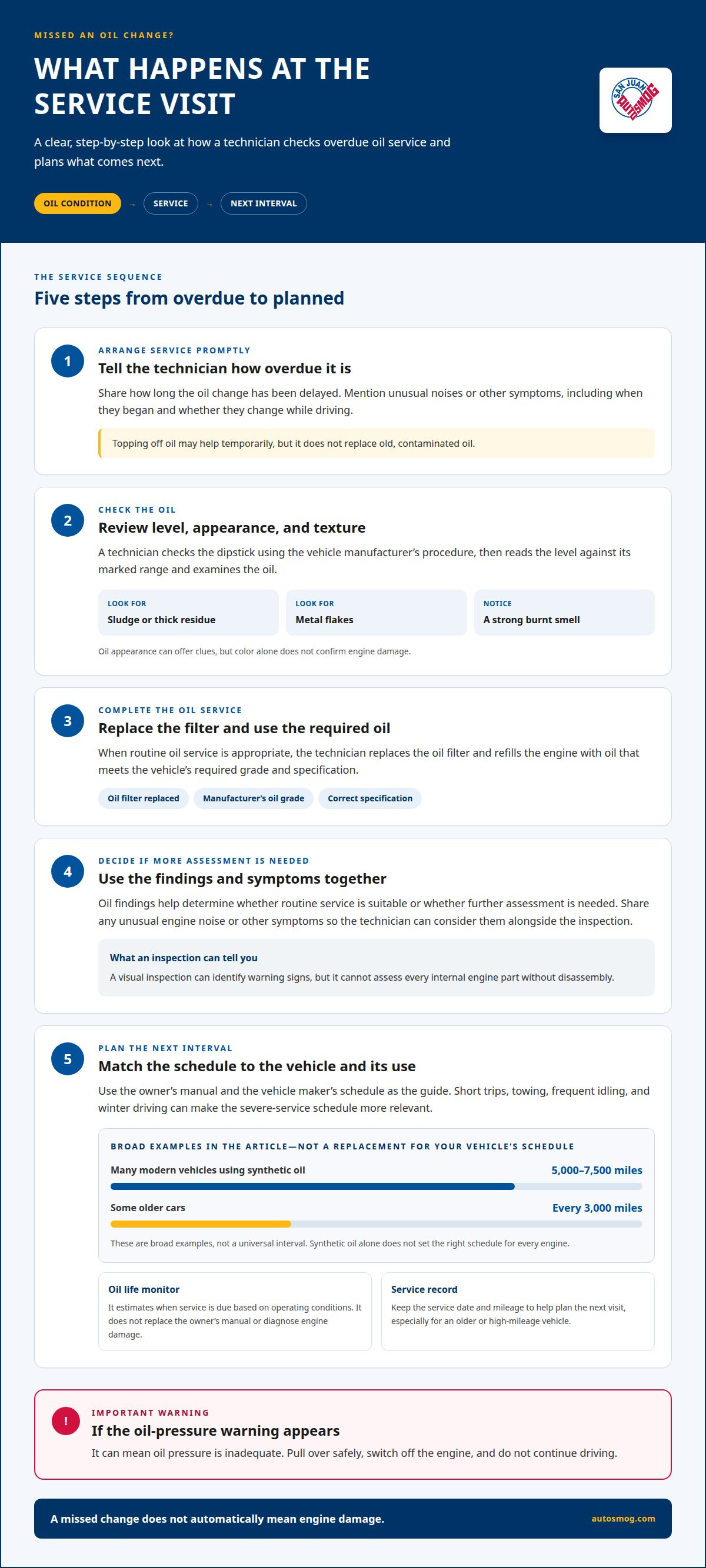
After a long gap, a professional assesses the oil and engine before deciding on the next service step. An inspection can identify visible warning signs, but it can’t assess every internal part without disassembly.
What a professional does after you miss a scheduled oil change
After a missed interval, arrange service promptly and tell the technician how overdue the oil change is. That history helps guide the inspection and next steps. The professional checks the oil level and condition for signs such as sludge, metal flakes, or a strong burnt smell. These findings help determine whether routine oil service is appropriate or further assessment is needed.
During service, the technician replaces the oil filter and refills the engine with oil that meets the vehicle’s required grade and specification. If the engine makes unusual noises or has other symptoms, share when they began and whether they change while driving. That context helps relate inspection findings to the vehicle’s behavior.
How a professional checks engine oil level and condition
A professional checks the dipstick to assess the oil level and examine the oil’s appearance and texture. The technician removes and wipes the dipstick, reinserts it, then reads the level against its marked range. The manufacturer’s procedure guides the check, including whether the engine should be warm or off. An accurate reading helps show whether the engine has enough oil for service.
Oil appearance offers useful clues, but color alone doesn’t confirm engine damage. Thick residue may point to sludge; a burnt smell or visible metal flakes deserves closer attention. The technician can inspect the drained oil and filter for additional signs. An inspection may confirm some damage, but it can’t rule out problems in parts that require disassembly to examine.
If you’d like a broader look, an optional multi-point inspection can also document other visible maintenance concerns while the vehicle is being assessed. That gives you a clearer picture of what needs attention alongside the overdue oil service.
What should you do immediately if you missed your scheduled oil change?
Arrange an oil change as soon as possible, even if you’re only a few hundred miles past the recommended interval. Tell the technician the service is overdue and describe recent driving, such as frequent short trips or towing. Share the last service date or mileage if you remember it. This information helps the professional assess the vehicle’s maintenance needs.
Note any new engine behavior, including rough idling, sluggish acceleration, or unusual noise. If an oil-pressure warning appears, pull over safely and switch off the engine. An oil-change reminder means scheduled service is due, while an oil-pressure warning means stop the engine rather than continue driving to the shop.
- Share the service history: Give the technician your best estimate of the last oil change.
- Describe symptoms: Explain when noises or warning lights appeared and how they changed.
- Request an overall check: Mention any other concerns noticed during regular driving.
During service, the professional checks the oil level and condition, then replaces the oil and filter using the vehicle’s required grade and specification. Findings such as sludge or metal flakes may call for closer assessment. An inspection can identify visible concerns, though it can’t rule out damage to parts that require disassembly.
An oil change and a multi-point inspection are separate services. If you add the optional inspection, it can review visible items such as fluid levels, brake condition indicators, tires, and wipers, so you can organize routine care without assuming every item needs service. San Juan Auto Smog offers full-synthetic oil changes, with a multi-point inspection, fluid check, and tire rotation available as options.
Schedule an oil service and discuss the overdue interval with a technician. Text (916) 961-6009 to make an appointment.
San Juan Auto Smog: Full-Synthetic Oil Change
San Juan Auto Smog provides Full-Synthetic Oil Changes for drivers in Fair Oaks when service is overdue or the next maintenance visit is approaching. The service replaces used oil and the filter to help you return to a schedule suited to your vehicle. The oil must match the manufacturer’s required grade and specification. San Juan Auto Smog offers full-synthetic oil changes, with a multi-point inspection, fluid check, and tire rotation available as options.
If you’re unsure when your last service occurred, share what you know about the vehicle’s history and daily use. A clear service record can make future maintenance easier to plan. When the old oil comes out, it should be recycled: the U.S. EPA notes that used oil can pollute the environment if it isn’t recycled or disposed of properly.
Learn about the Full-Synthetic Oil Change service and its role in routine maintenance.
Contact San Juan Auto Smog to arrange an oil change. Text (916) 961-6009 to make an appointment.
Make your next maintenance visit a fresh starting point
If you’re deciding what to do if you miss an oil change, use your next service visit to set a clear maintenance routine that fits your vehicle and driving habits. Keep the service record with your other vehicle documents so the date and mileage are easy to find next time. A regular routine also gives you a chance to discuss other concerns before they become harder to track.
San Juan Auto Smog offers Full-Synthetic Oil Change service, along with STAR-Certified Smog Checks and Older Vehicle Smog Checks for 1999 and older vehicles. As a STAR-certified Test & Repair station (License # RC 303707) at 4701 San Juan Ave, Fair Oaks, CA 95628, the shop can also diagnose a vehicle that fails, handle emissions-related repairs, and retest it. The Bureau of Automotive Repair’s Smog Check page explains how inspections work. An oil service and emissions test address different needs, so plan each according to your vehicle’s requirements.
Contact San Juan Auto Smog to arrange your next maintenance visit. Please book ahead. Text (916) 961-6009 to make an appointment.
Frequently Asked Questions
How Often Should Drivers Change Their Oil?
Follow the interval in your vehicle’s owner’s manual, which may depend on mileage, time, and driving conditions. There’s no single interval that fits every vehicle, so use the schedule written for your engine. Short trips, towing, and idling can make the severe-service schedule more relevant.
What Are the Risks of Missing an Oil Change?
Repeatedly postponing an oil change can leave the engine with oil that protects it less effectively. Contaminants and deposits may build up, oil flow can become restricted, and friction can increase wear on internal parts. In serious cases, poor lubrication can contribute to overheating or engine failure. The risk depends on the vehicle, oil, driving conditions, and length of the delay.
What Happens If You Forget About Your Regular Oil Change?
If you’re wondering what to do if you miss an oil change, arrange service and share your best estimate of the last service date or mileage. Topping off can temporarily address a low oil level, but it doesn’t renew the oil or filter. Recording the next service date and odometer reading can make future maintenance easier to track.
How overdue can you be for an oil change before it causes engine damage?
There isn’t a universal mileage buffer that guarantees an engine will avoid damage. Being a few hundred or even a couple thousand miles overdue does not by itself establish whether damage has occurred; risk depends on the vehicle, oil, driving conditions, and length of the delay. If you’re deciding what to do if you miss an oil change, arrange service promptly rather than relying on a mileage buffer.
Does missing an oil change void a car warranty?
Missing one oil change doesn’t automatically mean your warranty is void. A vehicle warranty may require you to follow the manufacturer’s maintenance schedule, including regular oil changes. Keep receipts or service records showing dates and mileage, and review your vehicle’s maintenance terms. Knowing what to do if you miss an oil change also means keeping clear records of completed service.
More articles
- Emergency brake check in Gold River: How it operates
- San Juan Auto Smog vs Autocheckcenter: A Fair Comparison
- Why California Smog Checks Fail and How Batteries Affect Results
- Smog Check in Carmichael Without the Pressure Sales
- STAR Smog Check for a 2001 Van Near Citrus Heights
- Benefits of High Mileage Synthetic Oil in Orangevale for Older Engines