Emergency brake check in Gold River: How it operates

Your parking brake should do more than hold the car on a hill. An emergency brake check in Gold River can help determine whether the system engages and releases properly. It can also help distinguish a parking-brake concern from a problem with the vehicle’s primary brakes.
If you’re unsure whether your car has a pedal, hand lever, push-button, or stick lever, the controls can seem confusing. Each type activates a mechanism that helps hold the vehicle in place, but the operation varies. Knowing the basics makes it easier to notice when the brake feels or behaves differently.
This article explains how different parking-brake styles work, what a professional check may examine, and how regular use can help keep the system working. You’ll also learn why a malfunctioning parking brake needs attention and how it differs from the brakes that normally slow your car. The goal is to help you understand the system and what to consider when it needs inspection.
Key Takeaways
- Pedal, hand-lever, push-button, and stick-lever parking brakes use different controls to engage a mechanism that holds the vehicle in place.
- Regular use when parking can help keep the system from rusting or sticking; unusual effort or a brake that won’t release deserves attention.
- A professional inspection can assess the parking-brake controls and components, including cables and the brake parts that hold the vehicle.
- Ask what the inspection covers and how a parking-brake concern differs from a problem with the primary brakes.
Table of Contents
Keeping the emergency brake in working order
Using the parking brake regularly and having it considered during brake service help keep it ready to hold the vehicle. Controls vary, but every system needs to engage the brakes and release fully.
Parking Brake Inspection Components
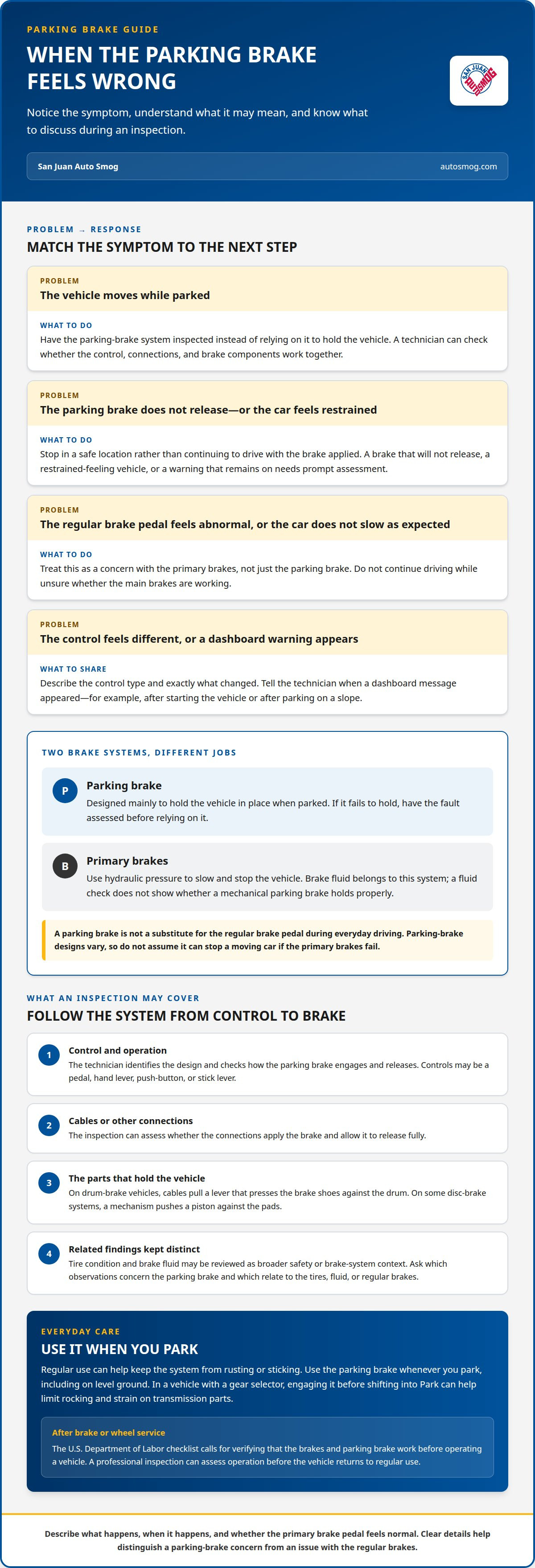
An emergency brake inspection assesses the control, cables or other connections, and brake components that hold a parked vehicle. Movement at the lever or pedal alone doesn’t show whether the brake is gripping properly. On drum-brake vehicles, cables pull a lever that presses the brake shoes against the drum. On some disc-brake systems, a mechanism pushes a piston against the pads.
Maintaining Emergency Brake Function
A professional checks how the parking brake engages and releases, then assesses whether its cables and brake components work together. This can help identify a cable that doesn’t apply the brake or a mechanism that fails to release. An emergency brake check in Gold River can clarify whether the system holds the vehicle as intended.
Use the parking brake whenever you park, including on level ground. It adds stability and may reduce the chance of a parked vehicle rolling if it’s hit. In a vehicle with a gear selector, engaging the parking brake before shifting into Park can also help limit rocking and strain on transmission parts.
Regular use matters. A parking brake left unused can rust and become less dependable. If the control feels different, the vehicle moves while parked, or the brake doesn’t release fully, have the system inspected instead of relying on it to hold the car.
Before relying on the vehicle, it’s a good habit to confirm that the parking brake engages and releases fully. This check is especially relevant after service involving the wheels or brakes, when the parking brake may have been engaged during the work. A professional inspection can assess its operation before the vehicle returns to regular use.
What does an emergency brake inspection include?
A professional inspection identifies the parking-brake design and evaluates the reported concern. The technician can also distinguish parking-brake findings from issues involving the regular hydraulic braking system, so the recommended next step addresses the right system.
The technician can review the vehicle’s dashboard indicators and parking-brake control for signs that operation has changed. For an electronic push-button brake, the assessment may include its control and displayed warning. For a mechanical pedal or lever, the technician considers its movement and the driver’s description, such as a change noticed after parking.
A broader brake review can add useful context without confusing one system with another. Tire condition affects how the vehicle meets the road, so visible wear or damage may be noted during a safety inspection. Brake fluid, by contrast, belongs to the hydraulic primary-brake system. A fluid check can help identify a concern in that system, but it doesn’t show whether a mechanical parking brake holds properly.
Ask the technician to explain which observations relate specifically to the parking brake and which concern the regular brakes, tires, or fluid. For example, visible tire damage is a separate finding, not an explanation for a parking-brake warning. Keeping those results distinct makes the inspection easier to understand and helps you decide what needs attention first.
A professional brake check can assess the broader brake system alongside the parking-brake concern. Share any dashboard message and describe when it appeared, such as after starting the vehicle or after parking on a slope. That context helps the technician interpret the inspection findings accurately.
Can I drive safely with a malfunctioning emergency brake?
A malfunctioning parking brake can leave the vehicle less secure when parked. The primary brakes use hydraulic pressure to slow and stop the car; the parking brake is designed mainly to hold it in place. If the parking brake fails but the primary brakes work normally, the vehicle may still stop with its regular brake pedal. However, have the fault assessed before relying on the parking brake to hold the car.
Pay attention to symptoms that affect driving. If the parking brake stays engaged after you release its control, it can create drag and damage braking components. Stop in a safe location rather than continuing to drive with the brake applied. A brake that won’t release, a vehicle that feels restrained, or a warning that remains on needs prompt assessment.
The parking brake isn’t a substitute for the regular brake pedal during everyday driving. Parking-brake design and operation vary by vehicle, so don’t assume it can stop a moving car if the primary brakes fail. In an emergency, follow the instructions in your owner’s manual and seek help when it is safe to do so.
If the primary brake pedal feels abnormal or the vehicle doesn’t slow as expected, treat that as a primary-brake concern, not just a parking-brake fault. Don’t continue driving while unsure whether the main brakes are working. An inspection can identify whether the issue involves the parking-brake control, its connections, or another part of the braking system.
For example, a lever that releases but leaves the car dragging points to a different concern than a parking brake that fails to hold while parked. Describe the exact symptom, including when it occurs and whether the primary brake pedal feels normal. These details help a technician assess the system and determine whether the vehicle is safe to drive for further evaluation.
What should I ask a mechanic before scheduling a parking brake inspection?
A clear conversation helps the mechanic understand the symptom and focus the inspection. Describe the control type and what happens, such as a pedal that feels loose or a push-button brake that won’t release.
Ask what the inspection will cover. A useful answer should explain how the technician will assess the control, its connections, and the brake parts that hold the vehicle. If your vehicle has drum brakes, ask whether the cable-operated lever and brake shoes will be considered. For an electronic control, ask how its operation will be evaluated.
Share when the problem occurs. For example, say whether the vehicle moves while parked, feels restrained after releasing the brake, or behaves differently on a slope. Ask how the technician will distinguish a parking-brake issue from a concern with the primary brakes. That distinction matters because the primary brakes slow the moving vehicle, while the parking brake is designed mainly to hold it in place.
- Ask how the technician will check engagement and full release.
- Ask which cables, connections, or brake components relate to your symptom.
- Ask how the findings will be explained before any recommended work.
- Ask whether a separate primary-brake concern was identified during the inspection.
These questions help you understand the inspection’s scope without assuming every parking-brake problem has the same cause. A cable that binds, a control that doesn’t engage, and a brake that fails to release are different symptoms. Give the mechanic the vehicle’s make and model, along with any recent changes in how the control feels.
If the vehicle feels as though its brakes are dragging or the primary brake pedal isn’t working normally, explain that before driving it in. For an inspection appointment, contact the shop about a parking-brake concern and share the symptom you’ve noticed.
San Juan Auto Smog: Brake Check
San Juan Auto Smog offers a Brake Check and Auto Brake Repair for drivers whose parking brake won’t hold, feels different, or fails to release fully. Describe the symptom when you book so the technician can assess the concern and clarify whether it involves the parking brake or another part of the braking system. Describe what you’ve noticed, such as the vehicle feeling restrained after releasing the control.
Brake concerns are also a useful prompt to consider broader preventive maintenance. If an oil change is due, a Full-Synthetic Oil Change can help you keep routine vehicle care organized alongside brake attention. San Juan Auto Smog offers full-synthetic oil changes, with a multi-point inspection, fluid check, and tire rotation available as options. The right next step depends on the symptoms and the maintenance your vehicle needs.
If your parking brake needs attention, contact San Juan Auto Smog to discuss a Brake Check. Text (916) 961-6009 to make an appointment.
Make your next maintenance step count
Use what you’ve noticed about your parking brake to guide your conversation with a technician. Describe the control, the symptom, and when it occurs. If you’re arranging an emergency brake check in Gold River, mention any other maintenance concerns to help plan practical next steps.
San Juan Auto Smog also offers a Full-Synthetic Oil Change, a STAR-Certified Smog Check, and an Older Vehicle Smog Check for vehicles 1999 and older. As a STAR-certified Test & Repair station (License # RC 303707) at 4701 San Juan Ave, Fair Oaks, CA 95628, the shop can also diagnose and repair emissions problems and retest the vehicle. These are separate services, but discussing what your vehicle needs can help you keep routine maintenance organized. An oil change supports engine care; it does not by itself ensure a vehicle will pass a smog inspection.
Share your concern and ask about the service that fits your vehicle. Contact San Juan Auto Smog today to discuss a Brake Check. Please book ahead. Text (916) 961-6009 to make an appointment.
Frequently Asked Questions
Where can I get an emergency brake checked in Gold River, California?
San Juan Auto Smog in Fair Oaks serves drivers from Gold River, Carmichael, Sacramento, Citrus Heights, and Orangevale. When arranging a visit, have your vehicle’s make, model, and year ready. Mention whether the parking-brake control is a pedal, hand lever, button, or stick lever. This helps the shop understand which system your vehicle uses.
How can I tell if my emergency brake needs inspection or repair?
Compare the control’s operation with the description in your vehicle’s owner’s manual. A change after rear-brake service, wheel work, or a period of storage is useful context for a technician. Keep recent service records handy, including the date and type of work. You can also look up open safety recalls for your vehicle on NHTSA’s recall lookup. This history can help narrow down when the change began without requiring you to inspect the vehicle yourself.
How often should a parking brake be inspected?
Use your vehicle manufacturer’s maintenance schedule as a starting point, and have the parking brake considered during routine brake service. Mention the system after work involving the rear brakes, since those components may interact with the parking-brake mechanism. Driving and parking habits can affect wear, so describe how you typically use the vehicle during service discussions.
Do Gold River auto shops offer same-day emergency brake checks?
Plan ahead when arranging a visit. Appointment capacity and the time needed to assess a vehicle can vary. Provide the make, model, year, and a concise description of the concern. If the vehicle has an electronic parking-brake button, mention it so the shop can prepare for the system in your vehicle. Text (916) 961-6009 to make an appointment.
More articles
- San Juan Auto Smog vs Autocheckcenter: A Fair Comparison
- Why California Smog Checks Fail and How Batteries Affect Results
- Smog Check in Carmichael Without the Pressure Sales
- What to Do If You Miss an Oil Change to Limit Engine Wear
- STAR Smog Check for a 2001 Van Near Citrus Heights
- Benefits of High Mileage Synthetic Oil in Orangevale for Older Engines