Avoid Buying a Lemon Used Car in Fair Oaks With Careful Checks

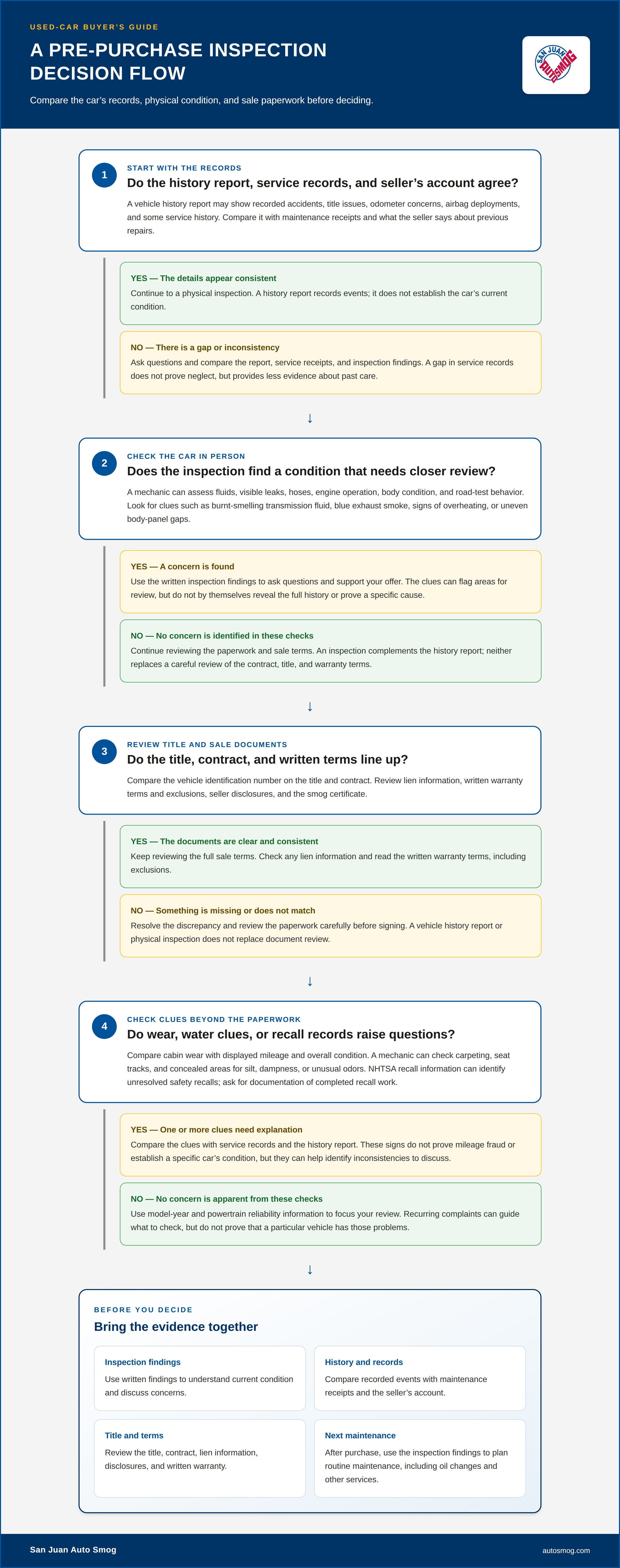
Buying a used car is a big decision, and a little preparation can help you make it with more confidence. Start by looking beyond a clean-looking exterior and checking the vehicle’s condition, history, reliability, and sale terms. A pre-purchase inspection by an independent mechanic can help you spot concerns before you commit.
It’s reasonable to want clear answers before committing to a used car. In California, protections depend on the sale details and any warranty, so don’t assume every problem qualifies for a remedy. A pre-purchase inspection can help identify leaks, overheating, accident damage, and other mechanical concerns. This guide explains what an inspection can assess, what a vehicle history report may reveal, how to weigh reliability, and what to know about consumer protections before deciding.
Key Takeaways
- A professional inspection can uncover fluid concerns, leaks, overheating signs, and other issues that a short test drive may miss.
- Pair a vehicle history report with a title review and physical inspection to build a clearer picture of the car’s past.
- Interior wear, flood clues, recalls, and model reliability records can help you judge whether a car deserves closer attention.
- Use inspection findings to plan routine maintenance, including oil changes and other services that support long-term vehicle care.
Table of Contents
- How a professional pre-purchase inspection checks engine fluids, leaks, and signs of overheating
- How a professional inspection can help assess vehicle history and title concerns
- Checking interior condition, mileage clues, and flood damage
- Choosing models with strong reliability records
- Establishing a maintenance baseline after a vehicle inspection
- San Juan Auto Smog
How a professional pre-purchase inspection checks engine fluids, leaks, and signs of overheating
Before buying a used car in Fair Oaks, have an independent mechanic assess the vehicle. The mechanic checks engine oil level and condition, transmission fluid, visible leaks, hoses, and signs of overheating. Burnt-smelling transmission fluid can indicate wear; blue exhaust smoke may point to oil burning. A road test also lets the mechanic watch engine temperature and performance.
An inspection can assess exterior damage, too. Uneven gaps between body panels, mismatched paint, or replacement parts may indicate earlier repairs. These clues don’t reveal the full accident history, but they can flag areas that deserve closer review before you decide.
Remaining warranty coverage can matter on a used car, too. According to the U.S. Environmental Protection Agency, federal emission warranties apply to used vehicles as well, and specified major emission control components, such as the catalytic converter, electronic emissions control unit, and onboard diagnostic device, are covered for the first 8 years or 80,000 miles, whichever comes first. The California Air Resources Board explains California vehicle and emissions warranty periods, including longer coverage for some partial zero-emission vehicles. Ask for the original in-service date and mileage so you can check what coverage may remain.
A professional used-car inspection can cover fluid condition, leaks, engine operation, visible body condition, and road-test behavior. A fair price depends on the vehicle’s condition, mileage, and local market, so compare similar cars using Kelley Blue Book and Edmunds. Use written inspection findings to support your offer, and review the sale terms carefully. For Fair Oaks buyers, a pre-purchase inspection can identify concerns before you sign.
How a professional inspection can help assess vehicle history and title concerns
A vehicle history report may show recorded accidents, title issues, odometer concerns, airbag deployments, and some service history. The U.S. Department of Justice’s National Motor Vehicle Title Information System lists approved providers of title history reports, and the National Insurance Crime Bureau’s free VINCheck can show whether participating insurers have reported a vehicle stolen or as a total loss. A mechanic’s inspection adds a physical assessment, including checks for repairs that may not appear in the report. Comparing the records can reveal inconsistencies. For example, a clean report alongside visible body repairs calls for questions about the vehicle’s previous damage.
Title wording matters, too. Even in an “as is” sale, a seller generally must be able to transfer good title free of undisclosed liens, so review the title and any lienholder information carefully; the California DMV explains title transfers. Before signing, compare the vehicle identification number on the title and contract. Review any lien information and written warranty terms, including listed exclusions.
Review the smog certificate and seller disclosures for details specific to the vehicle. In California, the seller is generally responsible for providing a valid smog certification when ownership transfers, according to the California DMV; San Juan Auto Smog performs change-of-ownership smog checks. Ask whether the manufacturer bought it back, and look for any buyback disclosure in the paperwork. A lemon generally means a vehicle with serious defects that persist despite repair efforts, but a history report alone cannot establish that status. If considering revocation of acceptance after delivery, keep the contract, inspection report, and repair records, and promptly seek California legal advice.
A professional inspection complements a vehicle history report by assessing the car’s current condition, not just recorded events. It can identify signs of unrepaired damage or mechanical trouble to discuss before purchase. Neither the report nor the inspection replaces a careful review of the contract, title, and warranty terms.
Checking interior condition, mileage clues, and flood damage
A thorough inspection compares cabin wear with the displayed mileage and the vehicle’s overall condition. A badly worn driver’s seat, smooth pedal surfaces, or shiny steering wheel may warrant closer review if the odometer reading seems low. These clues don’t prove mileage fraud, but they can help identify inconsistencies. Compare those observations with service records and the vehicle history report.
To look for flood damage, a mechanic can check carpeting, seat tracks, and concealed cabin areas for silt, dampness, or unusual odors. Discolored carpet and intermittent electrical problems may also indicate past water exposure. Multiple clues together, such as silt beneath a seat and malfunctioning dashboard controls, deserve particular attention.
Reliability records and consumer feedback can focus an inspection on recurring concerns for a make and model. NHTSA recall information can reveal unresolved safety recalls, while manufacturer technical service bulletins may describe known issues and recommended repairs. These records guide what to check, but don’t establish the condition of a specific car. Ask for documentation of completed recall work.
Outside, the mechanic looks for mismatched paint, uneven panel gaps, cracked glass, and repairs that may indicate previous body damage. Tire wear can reveal alignment or suspension concerns, while a road test lets the mechanic assess steering response and handling. A bumpy road at about 30 mph can help expose suspension noise or looseness. Together, these checks give car dealers and buyers clearer details to discuss before purchase.
Choosing models with strong reliability records
Research the exact model year and powertrain to help focus the inspection on likely trouble areas, since redesigns can change components. Consumer feedback may flag recurring complaints, such as rough shifting or electrical faults. These patterns can guide your research and help you decide what to check, but they don’t prove a particular vehicle has those problems.
A Carfax vehicle history report can add context about recorded service, mileage, and accidents. Compare its entries with maintenance receipts and the seller’s account of previous repairs. A gap in service records doesn’t prove neglect, but offers less evidence about past care. The number of previous owners alone can’t determine reliability.
NHTSA recall information can identify safety recalls affecting a particular model. Manufacturer technical service bulletins may describe reported symptoms and recommended diagnostic steps, but a bulletin is not a recall. A mechanic can use relevant information to focus checks on the vehicle’s year, equipment, and reported symptoms.
Reliability research can make an inspection more specific. If owners report transmission complaints for a model, the mechanic can assess shifting during a road test. If reports describe electrical faults, the mechanic can check dashboard functions and warning lights. Using model-specific information alongside a physical inspection helps Fair Oaks buyers assess the vehicle based on its condition and available evidence, rather than reputation alone.
Establishing a maintenance baseline after a vehicle inspection
After purchase, turn the inspection findings into a written baseline. Record the odometer reading, fluid condition, visible leaks, tire wear, brake observations, warning lights, and recommended follow-up. This record helps distinguish existing wear from changes that develop during ownership. Keep the inspection report with receipts and the owner’s manual.
Service records can show when oil, filters, and other routine items were last replaced. If records don’t establish the service history, use the vehicle manufacturer’s maintenance schedule to plan upcoming care. A professional oil change can address routine needs while documenting the vehicle’s condition at that visit. San Juan Auto Smog offers full-synthetic oil changes, with a multi-point inspection, fluid check, and tire rotation available as options. Consider each item’s condition and the manufacturer’s guidance before planning service.
Prioritize the inspection findings. A safety concern, such as uneven tire wear or a brake issue, deserves attention before a comfort-related recommendation. A multi-point inspection, booked as its own service, can help track key systems and identify items for future maintenance. Keep the results so later checks can be compared with this baseline.
Use the baseline to build a practical record, not a rigid schedule. Log each service date, odometer reading, and completed work. If a warning light appears or a leak grows, compare it with the original report and arrange an appropriate assessment. Consistent records clarify maintenance decisions and support the long-term care of an older or high-mileage vehicle.
San Juan Auto Smog
After you’ve decided to buy, San Juan Auto Smog can help with routine maintenance and California emissions testing. If the inspection points to overdue oil service, a full-synthetic oil change can support ongoing engine care. San Juan Auto Smog offers full-synthetic oil changes, with a multi-point inspection, fluid check, and tire rotation available as options. It won’t replace repairs identified by an independent mechanic, and an oil change alone won’t make a vehicle pass a smog inspection.
For emissions testing, choose the service that fits the vehicle. San Juan Auto Smog, a STAR-certified Test & Repair station (License # RC 303707) at 4701 San Juan Ave, Fair Oaks, CA 95628, provides a STAR-Certified Smog Check and an Older Vehicle Smog Check for vehicles 1999 and older. RV and motorhome smog checks are also available. If a vehicle fails, the shop can diagnose the problem, handle emissions-related repairs, and retest it. A smog check assesses emissions compliance; it isn’t a substitute for reviewing the car’s mechanical condition, title, or history before buying.
Keep the inspection report and service records together after the sale. They help you plan routine care, track completed work, and spot new concerns over time. If the mechanic notes that oil service is due, use the vehicle manufacturer’s maintenance schedule to guide timing. If a smog test is due, plan it separately from maintenance. This keeps each service focused on its purpose and gives you a clearer record of the vehicle’s care.
If you’d like to discuss the next step for your vehicle, contact San Juan Auto Smog. Text (916) 961-6009 to make an appointment.
Frequently Asked Questions
Are there laws protecting consumers from lemon cars?
Yes, but protections depend on the vehicle, seller, and written warranty. California used-car lemon-law protections apply only in specific circumstances, such as certain dealer sales of vehicles still covered by a manufacturer’s warranty. A used vehicle doesn’t qualify simply because it needs repairs. Review the sale documents and warranty terms, and keep dated repair orders and messages if problems arise. Clear records help show what failed, when it happened, and what repairs followed.
Why is it called a “lemon”?
“Lemon” comes from early 20th-century American slang for something worthless or disappointing. In car buying, people use it for a vehicle with serious or recurring defects. The nickname is informal, not a legal finding by itself. For example, a car that needs one ordinary repair isn’t automatically a lemon; legal protection depends on applicable rules and the vehicle’s circumstances.
How can a professional check a used car for open recalls by VIN?
A professional, or you, can use the vehicle identification number with NHTSA’s recall lookup to retrieve vehicle-specific recall status and distinguish open campaigns from completed work. Provide the VIN shown on the vehicle and sale paperwork so the records can be matched. If the VINs differ, resolve the discrepancy before relying on a lookup. For an open recall, request documentation after the repair and keep it with the vehicle records.
How can you choose a trustworthy independent mechanic in Fair Oaks for a pre-purchase inspection?
Choose an independent mechanic who will inspect the specific vehicle before purchase and provide written findings. Ask what the inspection covers, whether it includes a road test, and how urgent concerns are distinguished from routine maintenance. A useful report describes observed conditions rather than promising a trouble-free car. In Fair Oaks, arrange access to the vehicle and records before the seller’s deadline.
More articles
- What Oil Does My Car Take? Where to Look and What to Read
- After-work smog check in Gold River: hours and requirements
- San Juan Auto Smog vs Smogcheckdeals: a fair, side-by-side comparison
- Fair Oaks Auto Service Ratings, Reviews and Repair Options
- Cheapest smog check for a 1995 car in Gold River?
- Simple Maintenance Checks to Improve Gas Mileage