Seasonal vehicle maintenance in Sacramento to protect your car's value

Seasonal vehicle maintenance in Sacramento should put battery condition and brakes near the top of the checklist, then cover tires, fluids and filters according to the vehicle’s maintenance schedule.
It’s easy to think of seasonal care as a quick tire check, but Sacramento’s summer heat often exceeds 100 degrees Fahrenheit, and changing conditions can also make existing battery or brake issues more noticeable. A few focused checks can help you spot wear before it interferes with safe, reliable driving.
This guide explains how to prepare your battery and brakes for seasonal changes, what to include in a practical maintenance checklist, and how consistent service can help preserve your car’s condition and value. You’ll also learn when an oil change, fluid check or broader inspection belongs on your seasonal to-do list.
Key Takeaways
- Use your vehicle’s maintenance schedule as the starting point, then keep clear records of service and repairs to support its condition and resale value.
- Have the battery charge and terminals checked annually, and pay attention to slow cranking or dim lights.
- Plan brake pad and rotor inspections every 12,000 miles, and follow your vehicle’s guidance for brake fluid service.
- Pair routine oil service with checks of key fluids and other wear items to catch maintenance needs before they build up.
Table of Contents
Are Sacramento Drivers Falling Behind on Maintenance?
Busy schedules make it easy to let routine service slide. Seasonal changes offer a practical prompt to review your owner’s manual and catch up on routine checks before small wear becomes harder to manage.
California requires emissions testing for vehicles covered by its Smog Check program. The required timing depends on the vehicle and registration requirements; use your DMV renewal notice and the DMV smog inspection page to see whether a test is due, and review Sacramento Smog Check information for local testing details.
- Check tire pressure monthly, when tires are cold, and follow the vehicle manufacturer’s specifications; rotate tires every 6,000-8,000 miles to help manage uneven wear.
- Inspect shocks and alignment every 20,000 miles, and note pulling, bouncing, or uneven tire wear; these signs can point to suspension or alignment concerns.
- Review transmission-fluid service using the manufacturer’s schedule, since needs depend on the vehicle; check the fluid level around every 30,000 miles if that interval applies to your model.
- Test air conditioning annually and check cooling-system condition as temperatures rise; Sacramento summer heat often exceeds 100 degrees Fahrenheit.
- Before wet-season driving, check brake response, tire tread, wipers, and washer fluid; vehicles with air brakes need moisture-management checks that follow the manufacturer’s instructions.
For a licensed repair shop, check that the shop is registered with the California Bureau of Automotive Repair before booking. Ask for a written estimate and authorize work before repairs begin, then keep the completed invoice with your service records.
Commercial vehicles have added requirements: according to the Federal Motor Carrier Safety Administration, federal motor-carrier inspection, repair, and maintenance requirements are set out in 49 CFR Part 396. Keep fleet inspections and maintenance records organized around each vehicle’s condition and use.
How Does Maintenance Preserve Your Car's Value?
A maintenance schedule helps you track how your car has been cared for. Follow the manufacturer’s intervals, save service receipts, and record the date, mileage, work completed, and any follow-up needs. A clear history helps a future buyer understand what was maintained, while overdue service can raise questions about the vehicle’s condition.
Some routine checks, such as checking tire pressure or topping up washer fluid, may be suitable for careful DIY work. Keep receipts for supplies and record the date and mileage. Leave brake repairs, warning lights, and unfamiliar mechanical problems to trained technicians. Incorrect work can create further problems or hide a safety issue.
- Use a maintenance schedule: Record oil changes, fluid checks, and other services beside the manufacturer’s recommended intervals.
- Keep proof of each repair: Save invoices and write down any symptoms, such as a new noise or dashboard warning, that prompted the visit.
- Review the estimate: In California, a repair shop must provide an estimate before work begins, and you must authorize repairs before the shop starts.
- Ask about parts before approval: California customers can request replaced parts, but must make that request before authorizing repairs.
A California repair estimate lists estimated parts and labor costs but excludes sales tax. A shop may charge for disassembly needed to prepare an accurate estimate, even if you decline the repair. Keep the final invoice with your records. It lists the shop’s identifying information, work performed, parts supplied, and total parts and labor cost.
Routine maintenance and parts that wear through normal use aren’t covered by vehicle warranties. When appropriate parts and procedures are used, warranty repairs can be performed outside a dealership. Check for recalls using your vehicle identification number in the National Highway Traffic Safety Administration’s recall tool. Safety recall repairs are provided at no cost to you.
If you want an organized overview of your vehicle’s condition, a multi-point inspection, available as an option with a full-synthetic oil change, can help identify maintenance items to discuss and document.
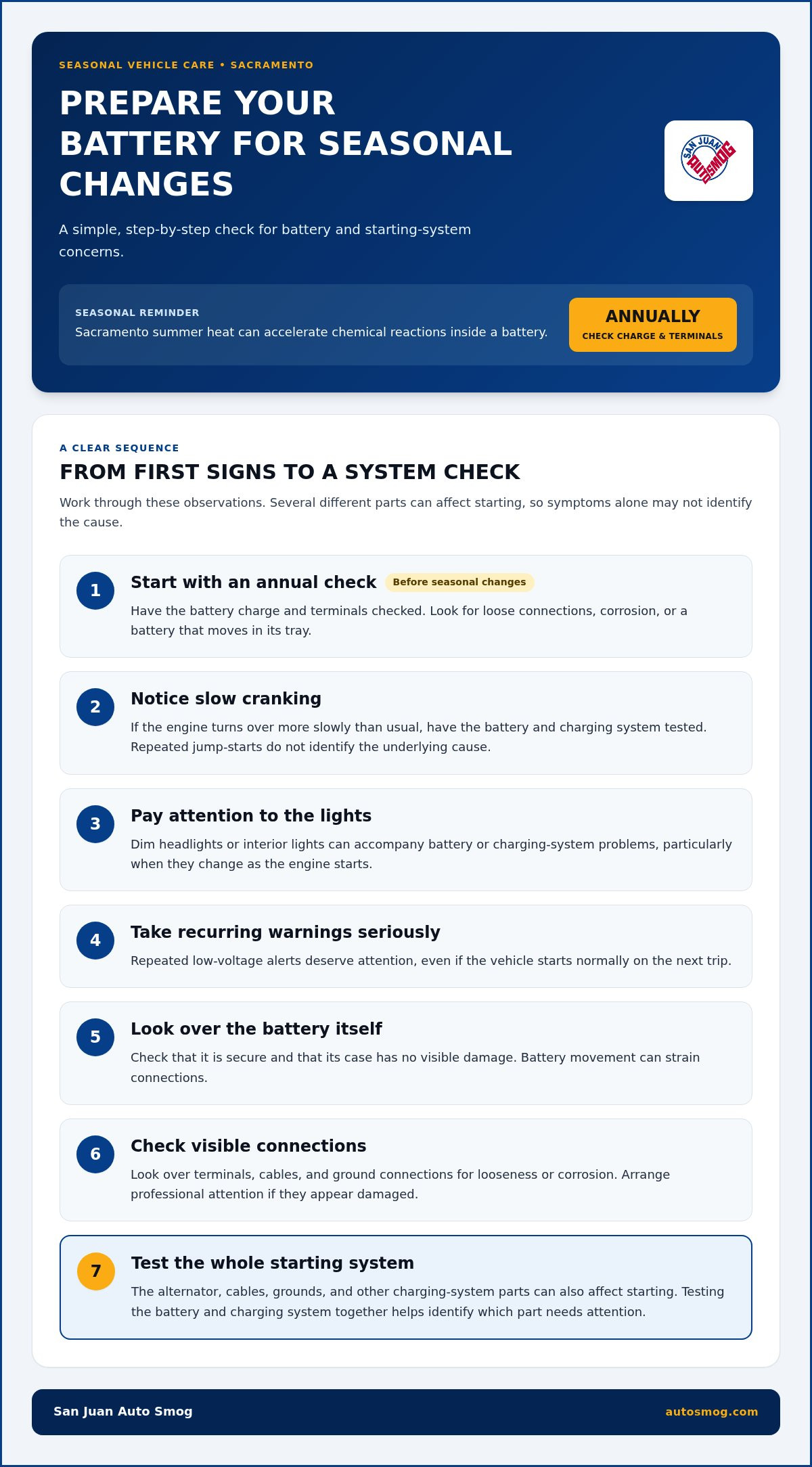
Battery and starting-system preparation
Sacramento’s summer heat can shorten battery life by accelerating chemical reactions inside the battery. Check its charge and clean its terminals annually, especially before seasonal temperature changes. A visual check can also reveal loose connections, corrosion, or a battery that moves in its tray.
Use these steps to spot starting-system concerns early:
- Notice slow cranking: If the engine turns over more slowly than usual, have the battery and charging system tested; repeated jump-starts don’t identify the underlying cause.
- Watch the lights: Dim headlights or interior lights can accompany battery or charging-system problems, particularly when they change as the engine starts.
- Look for recurring warnings: Repeated low-voltage alerts deserve attention, even if the vehicle starts normally on the next trip.
- Inspect the battery mounting: Check that the battery is secure and its case has no visible damage; movement can strain connections.
- Check visible connections: Look over terminals, cables, and ground connections for looseness or corrosion, and arrange professional attention if they appear damaged.
Heat-related wear may become noticeable later as slower starts or electrical symptoms. Don’t assume the battery is the only possible cause: the alternator, cables, grounds, and other charging-system parts can also affect starting. Testing the battery and charging system together helps identify which part needs attention.
Follow the vehicle manufacturer’s guidance for battery testing and replacement. Battery type, vehicle design, driving habits, and climate all affect service needs, so a fixed replacement interval won’t suit every car. Keep test results and replacement dates with your maintenance records. If a warning returns after a battery replacement, have the starting and charging systems checked rather than replacing another battery without a diagnosis.
Brake inspections and brake fluid service
Plan brake pad and rotor inspections every 12,000 miles. That interval gives a technician a chance to assess wear before the next season’s rain, hills, or heavier driving. Pad thickness matters, but inspections should also consider rotor condition and whether braking feels consistent.
Use these signs to decide when to arrange an inspection before your next scheduled service:
- Listen for new squealing or grinding: A change in brake noise can signal wear or another issue that needs inspection.
- Notice a soft or unusually firm pedal: A change in pedal feel is useful information for a technician, especially if it persists.
- Watch for pulling or vibration: If the vehicle pulls while braking or the steering wheel shakes, describe when it happens and at what speeds.
- Check tires alongside brakes: Uneven tire wear can affect handling and may offer clues about alignment or suspension concerns.
Brake fluid also needs attention. Moisture can lower its boiling point and contribute to brake failure. Brake fluid service is often recommended every 2-3 years, depending on the vehicle model and driving conditions. Follow the maintenance schedule for your specific vehicle instead of assuming every car needs service at the same interval.
Ask for the inspection findings in clear terms: which parts show wear, what work is recommended, and what needs attention first. California repair shops must provide an estimate before starting repair work, and customers must authorize repairs before work begins. Keep the estimate and final invoice with your maintenance records.
Season changes are a useful reminder, but symptoms matter between scheduled visits. If a brake warning light appears, braking changes, or fluid is visibly leaking near a wheel, arrange an inspection promptly and avoid treating fluid top-ups as a repair. A brake check can help assess pads, rotors, and related concerns. Schedule a brake check and include any pedal, noise, or vibration changes in your description.
San Juan Auto Smog: Full-Synthetic Oil Change
San Juan Auto Smog provides full-synthetic oil changes for drivers whose vehicles are due for service under the manufacturer’s maintenance schedule. Regular oil service supports engine performance and reliability, but an oil change alone doesn’t ensure a vehicle will pass a California Smog Check.
If your registration notice also calls for emissions testing, you can plan a Full-Synthetic Oil Change alongside a STAR-certified smog check. San Juan Auto Smog is a STAR-certified Test & Repair station (license RC303707) and serves drivers in Fair Oaks, Carmichael, Sacramento, Citrus Heights, Orangevale, and Gold River.
For seasonal planning, bring your maintenance schedule and note any changes you’ve noticed, such as unusual engine sounds or warning lights. Sharing those details helps keep the conversation focused on your vehicle’s needs.
San Juan Auto Smog offers full-synthetic oil changes, with a multi-point inspection, fluid check, and tire rotation available as options. Smog checks on 2000 and newer vehicles don’t need an appointment, but please book ahead for oil changes and for smog checks on 1999 and older vehicles, RVs, vans, and heavy trucks. Sacramento drivers can find local details on our Sacramento smog check page. Contact San Juan Auto Smog to arrange your next maintenance visit.
Make Your Next Maintenance Visit Easier to Plan
Let the way you use your car guide your next service conversation. Frequent short trips, long commutes, and extended periods parked outdoors place different demands on a vehicle. Mention your usual driving pattern so maintenance recommendations can reflect your everyday needs, not just the season.
This practical approach makes seasonal vehicle maintenance in Sacramento easier to fit into your routine. Focus on what matters most for your vehicle and plan the next step without trying to do everything at once.
For help planning routine care, contact San Juan Auto Smog. A thoughtful next step can help you feel more prepared for the miles ahead.
Frequently Asked Questions
Can Following the Schedule Really Prevent Expensive Repairs?
Following the maintenance schedule can help identify developing problems before they affect other parts. For example, an inspection may reveal a small fluid leak before the system runs low. A schedule also helps organize upkeep around mileage and time rather than waiting for a breakdown. Vehicle age, driving conditions, and earlier repairs all influence which items need closer attention.
What Effect Does Humidity and Heat Have on Your Vehicle?
Heat can age rubber hoses and seals, while moisture can encourage corrosion on exposed metal. During a visual check, look for cracked or swollen hoses and damp spots beneath the engine area. Notice whether electrical features work intermittently, too. These clues give a technician useful context, especially after a hot spell or extended wet weather.
Why Are Brake Inspections and Fluid Changes Critical?
A change in brake-fluid level can point to brake wear or a leak, so don’t treat low fluid as a simple top-up task. Have the cause assessed and the fluid condition reviewed. Brake fluid and engine oil serve different systems and follow different maintenance guidance. Report any change in pedal feel.
What Seasonal Vehicle Maintenance Is Recommended in Sacramento, California?
Include the cabin air filter in your seasonal planning. Sacramento is a high-pollen area, and replacing the cabin filter annually can help maintain airflow through the vehicle’s ventilation system. Also note when you last changed it, so you can distinguish a filter issue from a change in fan operation or vent airflow. Use the vehicle manual for model-specific service guidance.
How Should Sacramento Drivers Prepare Their Vehicles for Extreme Summer Heat?
Before summer driving, check the engine air filter and replace it if an inspection shows it’s clogged. A restricted filter can limit airflow to the engine, reduce horsepower, and decrease fuel efficiency. If the engine feels less responsive than usual, mention the change during an inspection rather than assuming the filter is the only cause. Record the replacement date with your service history.
What Winter Vehicle Maintenance Is Needed in Sacramento’s Mild, Rainy Climate?
After heavy rain, check for damp carpet or a musty smell inside the cabin. These signs can point to water entering around a door, window, or drainage area. Clear leaves from accessible areas near the base of the windshield, and arrange an inspection if water keeps returning. Addressing moisture early can help protect interior materials and make the source easier to identify.
More articles
- Power Steering Fluid Top-Off in Fair Oaks: How to Check and Add Fluid
- How Much Should a Smog Check Cost in California?
- Independent Mechanic Multi-Point Check in Orangevale
- Car Warranty and Oil Changes: What You Pay Out of Pocket
- How Far Ahead to Book a Used Car Check in California
- Student car maintenance checklist Carmichael students can use