Car maintenance for hot Sacramento summers: checks that matter

Sacramento’s summer heat can climb above 100°F, but the best protection for your car starts with routine checks, not guesswork. Car maintenance for hot summers in Sacramento means paying attention to coolant, tire pressure and tread, fluid levels, battery condition, and aging rubber parts before heat puts extra strain on them.
It’s easy to focus on the temperature gauge and overlook other parts that help your vehicle handle everyday driving. A tire inspection can reveal wear or damage, while checking coolant and other fluids can help identify issues that need attention. Follow your vehicle’s maintenance schedule, taking its age, condition, and driving demands into account.
This guide explains how summer heat affects key vehicle systems and which checks support safe, reliable driving. You’ll learn what to look for in tires, coolant, fluids, the battery, and rubber components, and how oil changes and optional add-ons like a tire rotation or multi-point inspection can fit into a practical maintenance routine.
Key Takeaways
- Keep cabin and engine air filters in mind as summer dust and seasonal air quality affect comfort and airflow.
- Check coolant only when the engine is cold, and watch for signs of wear around hoses and belts.
- Monitor tire condition, fluid levels, battery health, and rubber components as heat puts added demands on your vehicle.
- Use your vehicle’s maintenance schedule to plan oil changes and routine inspections that support dependable summer driving.
Table of Contents
Cabin air filters and seasonal air quality
Sacramento’s dry summer conditions can leave dust and debris on the cabin air filter, which cleans air entering the passenger compartment. A clogged filter may restrict airflow through the vents, making the fan feel less effective. If airflow drops or the filter looks dirty during an inspection, replacing it can help restore airflow and support cabin air quality.
Cabin filter replacement intervals vary by vehicle, so use the vehicle’s maintenance schedule as the guide, since driving conditions and the filter design affect service timing. A yearly review is a useful prompt for drivers who travel on dusty roads or use the ventilation system often.
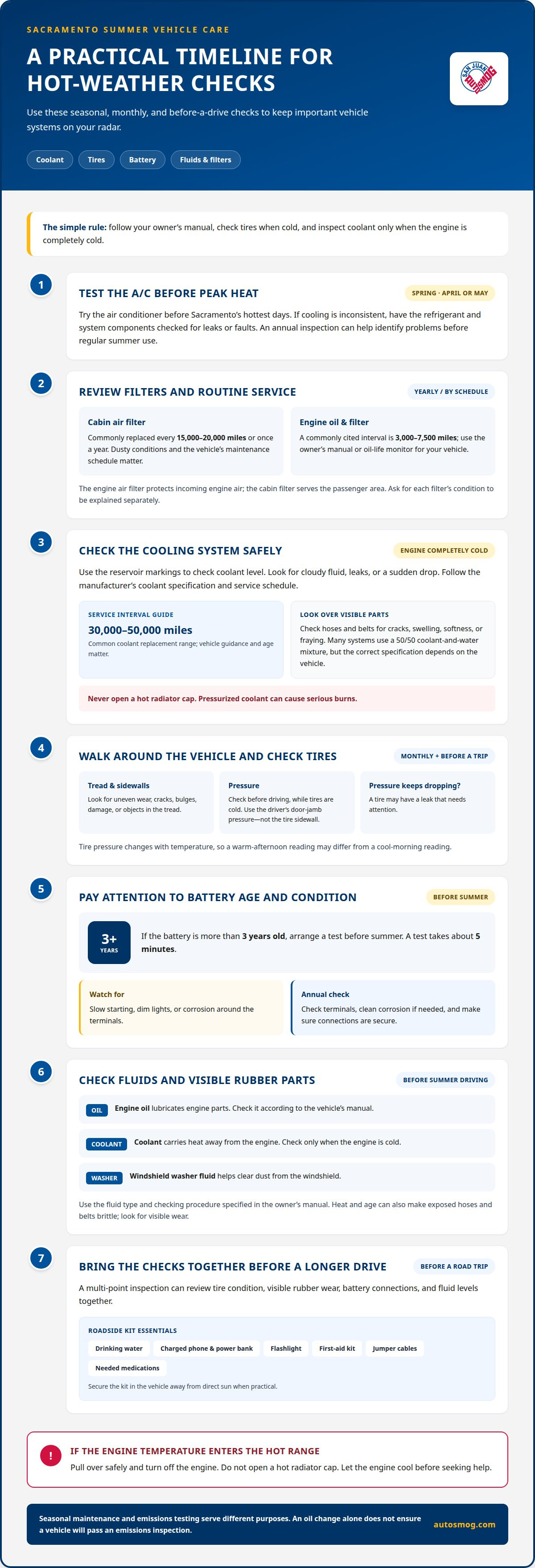
Engine oil and its filter need attention on a separate schedule. A commonly cited interval is 3,000-7,500 miles, but the owner’s manual and oil-life monitoring system should guide the specific vehicle. Fresh oil helps lubricate engine parts; the oil filter captures contaminants as oil circulates. An inspection of filters and other maintenance items can help identify what is due.
The engine air filter protects the engine’s incoming air from dirt, while the cabin filter serves the passenger area. Replacing both when inspection shows they’re dirty can support engine performance and cabin air quality. Ask for the condition of each filter to be explained separately, since one may need replacement before the other.
A California summer roadside kit should include drinking water, a charged phone and power bank, a flashlight, a first-aid kit, and jumper cables. Add any needed medications, and secure the kit in the vehicle away from direct sun when practical.
If a California smog check is also due, drivers can find local information about Sacramento smog checks. An oil change or filter replacement supports routine vehicle care, but by itself does not ensure a vehicle will pass an emissions inspection.
2. Coolant levels, condition, hoses, and thermostat
Check coolant only when the engine is completely cold. Use the reservoir markings to assess the level, and look for cloudy fluid, leaks, or a sudden drop. Follow the vehicle manufacturer’s coolant type and service schedule. Many systems use a 50/50 coolant-and-water mixture, but the correct specification depends on the vehicle. Coolant replacement intervals vary widely by vehicle and coolant type, so follow the manufacturer’s guidance.
Inspect visible hoses and belts for cracks, swelling, softness, or fraying. A leaking hose or worn belt can affect the cooling system. The thermostat regulates coolant flow as the engine warms. If the temperature gauge behaves unusually or the heater output changes unexpectedly, have the cooling system assessed rather than replacing parts by guesswork.
Check tire pressure before driving, while the tires are cold, and use the pressure listed on the driver’s door jamb, not the tire sidewall. Heat raises tire pressure, so an afternoon reading may differ from a cool-morning reading. Before a trip, inspect the tread and sidewalls for cracks, bulges, or other damage. The U.S. Department of Energy’s vehicle maintenance tips also explain how proper tire inflation and routine care help a vehicle run efficiently.
Test the air conditioner in spring, before Sacramento’s hottest days. If it doesn’t cool consistently, a technician can inspect refrigerant and system components for leaks or faults. An annual inspection of the air-conditioning refrigerant and components can help identify problems before regular summer use. April or May is a practical time to arrange service before peak demand.
California drivers should treat these checks as preventive maintenance and keep up with any smog inspection that applies to their vehicle. Seasonal checks and emissions testing serve different purposes.
If the temperature gauge enters the hot range or a warning light appears, pull over safely and turn off the engine. Don’t open a hot radiator cap, as pressurized coolant can cause serious burns. Let the engine cool before seeking help.
A multi-point inspection can bring these seasonal checks together before a longer drive.
3. How Sacramento heat affects tires, fluids, batteries, and rubber components
Sacramento’s hot weather puts extra stress on a vehicle’s battery, tires, fluids, and exposed rubber. Heat can shorten battery life, while rubber hoses and belts can become brittle with age and exposure. A monthly walk-around can help you spot visible tire damage, cracked rubber, fluid leaks, or corrosion before a longer drive.
Check tire tread and sidewalls monthly, especially before a road trip. Look for uneven wear, cracks, bulges, or objects embedded in the tread. Tire pressure changes with temperature, so use the vehicle’s door-jamb recommendation and check when the tires are cold. If pressure keeps dropping, the tire may have a leak that needs attention.
Before summer driving, check engine oil, coolant, and windshield washer fluid levels. Each has a different purpose: oil lubricates engine parts, coolant carries heat away from the engine, and washer fluid helps clear dust from the windshield. Use the fluid type and checking procedure specified in the owner’s manual. Don’t open a hot cooling system.
High temperatures can strain an older battery. If a battery is getting older, arrange a test before summer. Slow starting, dim lights, or corrosion around the terminals are reasons to have the battery and connections assessed. Loose connections can interrupt electrical flow, while corrosion can interfere with contact.
Check battery terminals annually, clean them if needed, and make sure the connections are secure. If the battery tests weak, replacing it before the hottest summer weather can help avoid an unexpected no-start. A technician can test the charge and inspect corrosion safely, since batteries contain corrosive material.
During a multi-point inspection, technicians can review tire condition, visible rubber wear, battery connections, and fluid levels together. This broader check can help identify which maintenance items need attention first, based on the vehicle’s condition and service history.
4. How routine maintenance supports safety and reliability
A maintenance schedule gives Sacramento drivers a practical way to catch wear before it affects everyday driving. Start with the vehicle manufacturer’s plan, then consider mileage, age, and driving conditions. Stop-and-go trips, long highway drives, and frequent short journeys place different demands on a vehicle. Keeping a record of completed services helps show what is due next.
Plan tire care around the vehicle’s guidance and how it’s used. Follow the rotation interval in the owner’s manual to promote more even wear, and plan for replacement as tread gets low. A rotation cannot correct damage or restore worn tread, so inspect the full tire.
Brakes also deserve scheduled attention. Regular brake inspections can help track pad and rotor wear, while changes in braking feel or unusual noises call for attention sooner. Periodic suspension and alignment checks can help identify wear that may contribute to uneven tire wear or poor handling. Follow the manufacturer’s instructions for timing.
Oil protects moving engine parts, and the oil filter captures contaminants as oil circulates. A commonly cited oil-and-filter interval is 3,000-7,500 miles, but the correct timing depends on the vehicle’s maintenance schedule and use. Keeping fluids at the proper level also supports normal operation. A routine oil change is a useful time to review the next maintenance items, rather than treating oil service as the whole plan.
Keep a clear service record with the date, mileage, completed work, and any item needing follow-up. Regular inspections can identify developing concerns before they interrupt a commute or road trip. A service record also helps you make informed decisions about future care and recognize when driving conditions call for closer attention.
San Juan Auto Smog
San Juan Auto Smog can help Sacramento-area drivers connect seasonal maintenance with routine vehicle care. As a STAR-certified Test & Repair station (license RC303707) at 4701 San Juan Ave, Fair Oaks, CA 95628, San Juan Auto Smog offers full-synthetic oil changes, with a multi-point inspection, fluid check, and tire rotation available as options. If an oil change is due, it can keep service on schedule; proper maintenance supports engine performance and reliability but does not guarantee a smog inspection result. Drivers due for emissions testing can arrange a STAR-Certified Smog Check (see the Bureau of Automotive Repair’s Smog Check Program for state requirements), while vehicles from 1999 and older have an Older Vehicle Smog Check option. For repairs found during a seasonal check, the shop also offers auto repair and maintenance; California’s auto-repair consumer guide explains your right to a written estimate. RV, van, and heavy truck smog inspections are also available.
Use your owner’s manual and service records to identify what is due next, such as an oil change or emissions testing. Keeping these needs organized makes it easier to maintain the vehicle beyond a single seasonal check.
Contact San Juan Auto Smog to discuss your vehicle’s maintenance or smog-check needs. Text (916) 961-6009 to make an appointment.
Make your next maintenance step count
Choose one upcoming service and record it alongside your vehicle’s maintenance history. Note the date, mileage, and any changes you’ve noticed, such as slower starting or unusual airflow. This gives you a clearer basis for planning future care instead of waiting for several concerns to appear at once.
For car maintenance for hot summers in Sacramento, consistency matters more than trying to complete every possible check in one visit. Follow the manufacturer’s schedule, account for how you drive, and prioritize items that affect safe, dependable operation. If you’re unsure what should come next, a technician can explain the vehicle’s condition and the reason for each recommendation.
Keep the plan straightforward and adjust it as your driving needs change. Contact San Juan Auto Smog today to discuss your vehicle’s maintenance needs. Please book ahead. Text (916) 961-6009 to make an appointment.
Frequently Asked Questions
How do I know which maintenance is overdue?
Review your service records before summer travel, then compare upcoming work with the manufacturer’s schedule. If records are incomplete, a maintenance inspection can help establish what needs attention first.
What car maintenance should Sacramento drivers do before summer heat?
Before summer driving, review the owner’s manual and recent service records. Prioritize overdue oil service, filter condition, coolant, tire wear, battery health, and air-conditioning operation. For example, if you’re planning a long drive from Fair Oaks or Carmichael, note any warning lights or unusual changes beforehand. A focused inspection can help turn that list into a practical maintenance plan.
How often should you check coolant and radiator hoses in extreme heat?
Check coolant when the engine is cold, including before a longer trip, and inspect visible hoses during routine maintenance. Look for leaks, cracks, swelling, or hoses that feel unusually soft. Coolant replacement timing depends on the vehicle and coolant specification, so follow the manufacturer’s schedule. A falling reservoir level or recurring temperature warning calls for prompt diagnosis.
How can you prevent car battery failure in hot weather?
Arrange a battery test before summer if the battery is getting older, and have its connections assessed if corrosion is visible. Heat can shorten battery life, so a test can reveal a weak charge before it causes a starting problem. Keep battery checks in your maintenance records, especially if the vehicle has been slow to start after sitting.
What tire pressure and tread checks are recommended for Sacramento summer temperatures?
Check tire pressure monthly when the tires are cold, using the pressure shown on the driver’s door jamb. Inspect each tire’s tread and sidewall for uneven wear, cracks, bulges, or embedded objects. Before a road trip, include the spare if your vehicle carries one. If a tire repeatedly loses pressure, have the cause assessed instead of repeatedly topping it up.
More articles
- Smog Repair in Sacramento: What Happens After a Failed Test
- Best Smog Shop for Quick Turnaround in Orangevale
- Is It Safe to Drive With the Oil Light On? What to Do
- Who Handles Diesel Smog Checks Near Sacramento?
- Local Auto Repair and Maintenance in Gold River
- Smog Test for a 1998 RV in Sacramento: Where to Go