Brake Check in Orangevale: What’s Included and What It Costs

A brake check is more than a quick look at the pads. If you’re wondering what a brake check includes in Orangevale, it can cover pads, rotors or drums, calipers, brake lines and hoses, fluid condition and level, and relevant warning indicators. The aim is to spot wear, leaks, or other issues that could affect how your vehicle stops.
It’s reasonable to want a clear explanation before agreeing to work. This guide outlines what technicians examine, how fluid and sensor checks fit in, and how findings inform repair recommendations. You’ll also learn why squealing, vibration, or a soft pedal merit attention, and how tire condition and routine fluid checks contribute to the broader maintenance picture. That context can help you understand what an inspection shows and what to consider next.
Key Takeaways
- A brake check can assess pads, rotors or drums, calipers, hoses, and lines for wear, damage, or leaks.
- Brake fluid condition and level matter; inspection findings help explain whether maintenance or repair is recommended.
- Squealing, vibration, a soft pedal, or longer stopping distances are useful signs to arrange a brake check.
- Include tire condition and fluid checks in your broader maintenance plan to support dependable braking and vehicle care.
Table of Contents
Pads, shoes, springs, and related components
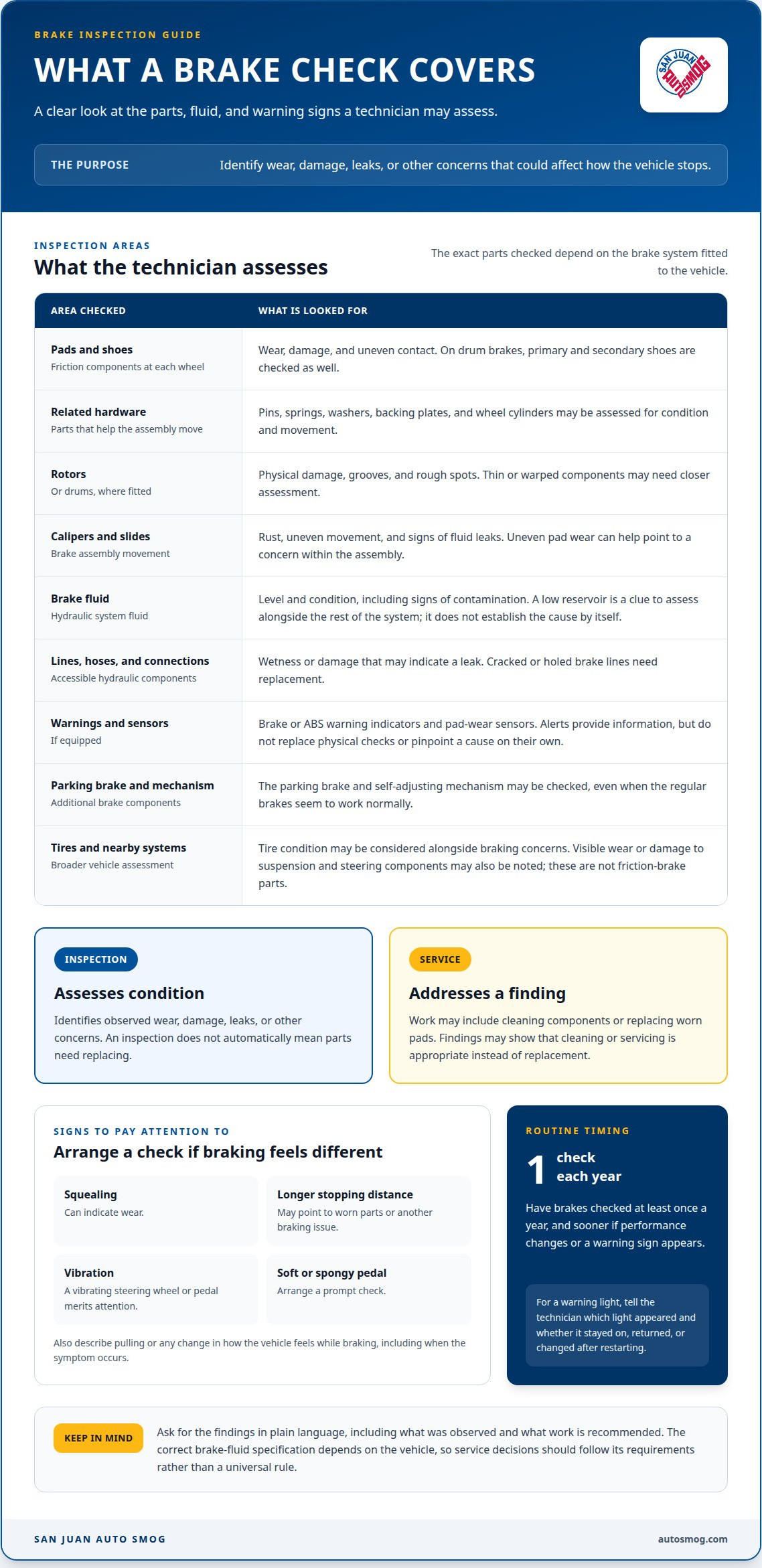
A brake inspection examines the friction components and the parts that help each brake assembly move correctly. At each wheel, a technician checks pads or shoes for wear, damage, and uneven contact. The assessment may also cover pins, springs, washers, the backing plate, and wheel cylinders. On vehicles with drum brakes, primary and secondary shoes need checking too. These components keep parts in position and allow them to move as designed.
Rotors are checked for physical damage, grooves, and rough spots that can wear pads faster. Thin or warped components need closer assessment. Calipers and slides are examined for rust, uneven movement, and fluid leaks. Uneven pad wear can help indicate whether the concern involves a pad, caliper, or another part of the assembly.
What is the difference between a brake inspection and brake service? An inspection assesses condition and identifies concerns; it doesn’t automatically mean parts need replacing. Brake service is the work that follows a finding, such as cleaning components or replacing worn pads. The inspection may show that cleaning or servicing is appropriate instead of replacement.
Shocks, struts, and steering components aren’t friction brakes, but they matter in a broader vehicle assessment. Worn suspension parts can affect how the vehicle responds to steering and braking. A technician may note visible wear or damage and consider whether tire condition suggests uneven contact. These observations can help distinguish a brake concern from a suspension or steering issue.
What are signs that a car needs a brake check? Squealing, longer stopping distances, a vibrating steering wheel or pedal, and a soft or spongy pedal are reasons to arrange an inspection. If your vehicle pulls or feels different while braking, describe when it happens. That detail helps relate the symptom to the components being assessed.
Brake fluid and sensor evaluation
Brake fluid transfers force from the pedal to the wheel brakes. During an inspection, the technician checks its level and condition, including signs of contamination. Dirty or contaminated fluid deserves attention because its condition affects how the hydraulic system operates. The correct fluid specification depends on the vehicle, so service decisions should follow its requirements, not a universal rule.
Fluid level is another useful clue. A low reservoir can accompany a leak or changes in brake components, so the technician considers it alongside the rest of the system. Looking at the reservoir alone can’t establish the cause. The inspection also checks accessible brake lines, hoses, and connections for wetness or damage. A leak needs attention before the braking system can be considered sound.
Sensor checks depend on the equipment fitted to the vehicle. A technician can note warning indicators, such as an illuminated ABS or brake warning light, and consider them alongside other findings. Some vehicles also have wear sensors that signal when pads need attention. These alerts provide information but don’t replace physical checks. A warning light can indicate a system concern without pinpointing its cause.
Tell the technician which light appeared and whether it stayed on, returned, or changed after restarting the vehicle. That detail helps focus the assessment. If a dashboard warning remains illuminated, arrange a proper inspection rather than relying on fluid level alone. Depending on the vehicle’s condition, findings may call for further diagnosis, fluid service, or repair.
A brake check can connect fluid condition, visible leaks, and warning indicators in one assessment. Ask for the findings to be explained in plain language, including what was observed and what work is recommended. That makes it easier to distinguish routine maintenance from a repair that addresses a specific concern.
Brake maintenance and road safety
Brake inspections can identify wear, damage, and leaks before they worsen. A technician may also check the undercarriage for damage and inspect the parking brake and self-adjusting mechanism. These parts matter even when the regular brakes seem to work normally. For example, a parking brake that fails to hold needs attention, separate from worn friction surfaces.
What California rules apply to brake inspections or repairs? For routine brake care, observed condition and the vehicle manufacturer’s specifications guide service decisions. The Bureau of Automotive Repair’s maintenance and repair guide explains your right to a written estimate before work begins. An inspection identifies concerns, and recommended work should relate to findings such as wear, damage, or leaks.
How often should brakes be inspected? Follow the inspection interval in your owner’s manual; many drivers have their brakes looked at during routine maintenance visits. Arrange a check sooner if braking performance changes or a warning sign appears between scheduled inspections.
Pay attention to how your vehicle responds, not just to sounds. Squealing can indicate wear, while a longer stopping distance may point to worn parts or another braking issue. A vibrating pedal or steering wheel, or a soft pedal, calls for a prompt check. Describe when the symptom occurs, such as during a gentle stop or after driving downhill. That context can help the technician assess the concern.
Brake care also connects with tire condition. Uneven tire wear or damage can affect how the vehicle feels on the road, so technicians consider tires alongside braking concerns. A broader multi-point inspection can help identify other maintenance needs without confusing them with brake repairs.
It’s also worth checking for open safety recalls with the NHTSA recall lookup, since some recalls involve braking components. Cracked or holed brake lines need replacement because they can leak fluid and compromise hydraulic operation. An inspection may also find a component that needs cleaning or servicing rather than replacement. Base repair decisions on the specific finding, and address safety-related damage promptly. Regular checks can identify developing concerns and help maintain braking performance before a small change becomes a serious driving problem.
What parts are checked during a brake check?
A brake check takes account of how the vehicle’s braking system is configured, because designs can differ from one wheel to another. The inspection follows the components fitted to that vehicle rather than assuming every system is the same. This keeps the assessment relevant to the vehicle’s actual setup.
Inspection findings are most useful when they identify the location and type of concern. For example, noting one wheel or side gives clearer context than a general statement that the brakes show wear. The technician can explain what was observed and whether the finding came from a visual assessment or a measurement.
Measurements add detail when appearance alone can’t establish a component’s condition. The vehicle’s applicable specifications provide a reference for interpreting them. A visible mark by itself doesn’t show whether a part needs replacement; the finding must be considered alongside its condition and the relevant specification.
It also helps to distinguish an inspection finding from a repair recommendation. The inspection records what was observed; the recommendation explains what action addresses that concern. If a proposed repair covers multiple areas, ask how each item relates to its finding. This makes the estimate easier to understand and discuss.
For a clear assessment, share any change you’ve noticed in how the vehicle responds, then review the findings with the technician. A focused brake check can help you understand which parts of your vehicle’s braking system were assessed and what the results mean.
Rotors: checked for physical damage and measured; brake lines: checked for leaks; bearings: checked for excessive movement; hubs and lug-nut holes: checked for unsafe wear or damage; rear drums: checked for cracks and hard spots, with findings compared with manufacturer specifications; under the hood: master cylinder, power booster, brake lines, vacuum hose, and combination valve; undercarriage: front hoses, mounting brackets, and wheel cylinders checked for damage or rust.
San Juan Auto Smog: Brake Check
San Juan Auto Smog provides Brake Checks to help you understand your vehicle’s braking condition and inspection findings. Consider an assessment if you notice a change in pedal feel, braking response, or a dashboard warning. The technician can evaluate brake components and fluid, then explain observed wear, damage, or leaks clearly.
Recommendations should relate to inspection findings, so you can understand what needs attention and why. If fluid condition is part of your maintenance picture, a separate Fluid Check can help you keep track of routine needs. Preventive care also helps you address concerns before they disrupt everyday driving.
For an inspection focused on your vehicle’s brakes, learn about the Brake Check. Contact San Juan Auto Smog at 4701 San Juan Ave in Fair Oaks to discuss your brake inspection. As a STAR-certified Test & Repair station (license RC303707), the shop can also diagnose and repair a vehicle that fails its smog check. Text (916) 961-6009 to make an appointment.
Make Your Next Maintenance Visit Count
Use your brake check to plan ahead, not just respond to a concern. Keep the findings with your vehicle’s maintenance records and review them during future service. They provide a useful reference when planning your next visit.
If you’re still wondering what a brake check includes in Orangevale, San Juan Auto Smog can explain the inspection and recommendations. You can also plan routine care around a Full-Synthetic Oil Change, a STAR-certified smog check for Orangevale drivers, or an Older Vehicle Smog Check for vehicles from 1999 and older. San Juan Auto Smog offers full-synthetic oil changes, with a multi-point inspection, fluid check, and tire rotation available as options. Smog checks on 2000 and newer vehicles don’t need an appointment, but please book ahead for oil changes and for smog checks on 1999 and older vehicles, RVs, vans, and heavy trucks. An oil change alone doesn’t ensure a vehicle will pass a smog inspection.
Choose a next step that fits your vehicle’s needs. Contact San Juan Auto Smog about your brakes to discuss an inspection. A clear maintenance plan can make caring for your vehicle feel more manageable. Text (916) 961-6009 to make an appointment.
Frequently Asked Questions
What Does a Basic Brake Inspection Include?
A visual brake check can include a review of friction components, rotors or drums, hydraulic parts, and visible fluid leaks. The scope depends on the inspection; a visual check differs from measuring components or diagnosing a specific concern. For example, a dashboard warning or unusual pedal feel may need further assessment to identify the cause.
What’s included in a visual brake check?
A visual brake check looks for visible wear, damage, and leaks around accessible components. The technician can inspect pads, rotors, calipers, hoses, and lines, then note uneven wear or wetness near a connection. A visual review can reveal warning signs, but it won’t uncover every hidden fault or replace measurements when a component needs closer assessment.
What does a brake inspection include at an auto repair shop?
A professional inspection can assess brake pads, calipers, rotors or drums, fluid level, and brake lines. The technician considers reported symptoms alongside visible findings, so mention details such as a warning light appearing after startup. For Orangevale drivers asking what a brake check includes, the findings can clarify whether the concern involves routine wear or needs further diagnosis.
How much does a brake inspection cost in Orangevale, California?
The price depends on the case and is provided after a quote request; factors include the vehicle’s brake design, inspection scope, and whether diagnosis beyond a visual check is needed. Repairs are separate from inspection findings, and required parts can affect the final estimate. Ask for the inspection charge and proposed work to be explained separately, so you can see what each item covers.
More articles
- How to Find an Honest Smog Shop Near Gold River
- How to Make My Car Last Longer in Citrus Heights
- San Juan Auto Smog vs Joessmogcheck: A Fair Comparison
- Quick and Reliable Oil Change in Sacramento With Oil Type Advice
- Fair Oaks auto maintenance for busy parents: Find a trusted garage
- Smog Inspection Cost: What Fair Oaks Drivers Actually Pay